

Association events and corporate events can share a venue, a ballroom setup, and even a caterer, but they run on different economics. A corporate event spends company money to reach a business goal. An association event has to earn its keep, because for many associations the annual meeting is one of the largest sources of non-dues revenue on the books. Once you know which model you're planning for, decisions about pricing, sponsors, timelines, and even badges get easier.
The core difference: who pays and why they show up
At a corporate event, the host company covers most or all of the cost. Attendees are employees, customers, partners, or prospects, and attendance is often expected or invited rather than purchased. Success is measured internally: pipeline influenced, product adoption, employee alignment, or customer retention.
At an association event, attendees usually pay to register, and nobody has to come. Members choose to spend their budget and their time with you, often after making the case to their own employer. Success is measured in attendance, member renewals, satisfaction, and net revenue that funds the association's work for the rest of the year.
That single difference (cost center versus revenue center) shapes almost everything else.
Association vs corporate events at a glance
| Factor | Association event | Corporate event |
|---|---|---|
| Who pays | Attendees, exhibitors, and sponsors | The host company |
| Primary goal | Member value and net revenue | A business outcome (sales, alignment, retention) |
| Attendance | Voluntary and competitive | Often expected or invite-only |
| Decision makers | Staff plus volunteer boards and committees | Executives and internal stakeholders |
| Planning horizon | Venues often booked years ahead | Months, sometimes weeks |
| Attendee list | Grows until the doors open, with walk-ups | Usually known and fixed early |
| Success metric | Attendance, renewals, net revenue | ROI against a business goal |
Non-dues revenue: why the annual meeting carries the budget
Membership dues rarely cover the full cost of running an association. Everything else an association earns is non-dues revenue, and the annual conference is usually where a large share of it comes together. If you plan association events, you're not only running a meeting; you're running one of the organization's most important income streams.
- Registration fees: Tiered pricing with a member rate and a higher non-member rate. The gap between the two is also a recruitment tool, since joining can cost less than the non-member premium.
- Exhibit hall sales: Booth fees from suppliers who want access to your members. Exhibitors judge the event on traffic and lead quality, so floor plan and schedule matter.
- Sponsorships: Named sessions, receptions, Wi-Fi, charging stations, and lanyards. Corporate events have sponsors too, but at association events sponsors are often essential to the budget.
- Education and continuing education credits: Pre-conference workshops, certification prep, and CE-eligible sessions that members need to keep professional credentials current.
- Awards and recognition programs: Nomination fees, gala tickets, and table sales tied to industry awards.
- Content after the event: Session recordings and on-demand bundles sold to members who couldn't attend.
For a deeper look at packaging sponsor opportunities, see how event sponsorship works.
Pro tip: Build your association event budget from net revenue per line, not gross. A sponsorship that pays well but requires a custom activation, extra A/V, and staff time can net less than a simpler package priced lower.
Planning timelines and decision-making
Large association meetings often contract venues several years out, because citywide conventions compete for the same convention centers and hotel blocks. Dates rotate between regions to keep the event accessible to members in different parts of the country, and contracts lean heavily on room block commitments. That makes attrition and cancellation clauses especially important; our guide to hotel and venue contracts covers what to negotiate.
Decisions also move through more people. Program content may come from a volunteer committee, the board may approve the budget, and the call for presentations can open almost a year before the event. Building approval time into the calendar is part of the job.
Corporate events usually move faster and change later. An executive can add a session, move a date, or double the guest list weeks before the event. Flexibility matters more than long-range forecasting, so choose vendors who can handle short lead times and late changes.
How the attendee experience differs
Association attendees are peers from different organizations, many of whom see each other once a year. Networking is often the main reason they come, alongside education. First-time attendees need extra help finding their footing, which is why many associations run orientation sessions and assign volunteer ambassadors.
Corporate attendees often share an employer or a customer relationship. The experience is more tightly branded and more focused on a single message, whether that's a product launch, a sales kickoff, or a leadership offsite. Confidentiality can also matter: internal strategy sessions may need controlled access and an attendee list that never leaves the building.
Badges and credentials for each event type
Badges are where the differences become visible on the show floor.
Association event badges
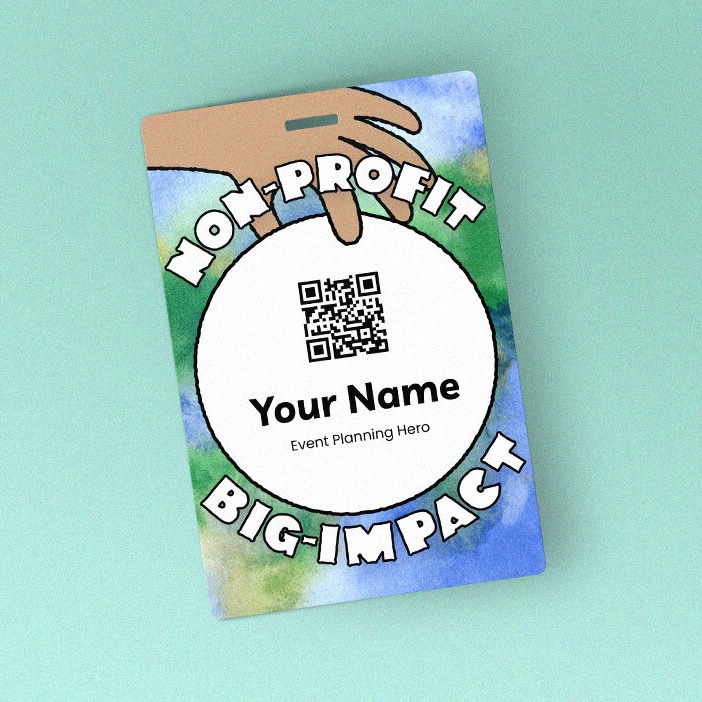
- Member status: Distinguish members, non-members, and first-time attendees so volunteers and staff can welcome newcomers.
- Role tiers: Board members, speakers, exhibitors, sponsors, staff, and press each need a clear, readable marker. A color band or printed role line works better than relying on lanyard color alone.
- Organization and city: Peers want to know where someone works and where they're from. These lines start conversations.
- CE tracking: A custom event badge with a per-attendee QR code lets session monitors scan for continuing education credit instead of collecting paper sign-in sheets.
- Walk-up registration: Association attendee lists keep growing until the doors open, so plan a hybrid approach: pre-print names for early registrants and print late registrants on-site with direct thermal badge stock.
Many associations are registered non-profits, and our guide to custom event badges for non-profit conferences covers badge options built around mission-driven budgets.
Corporate event badges
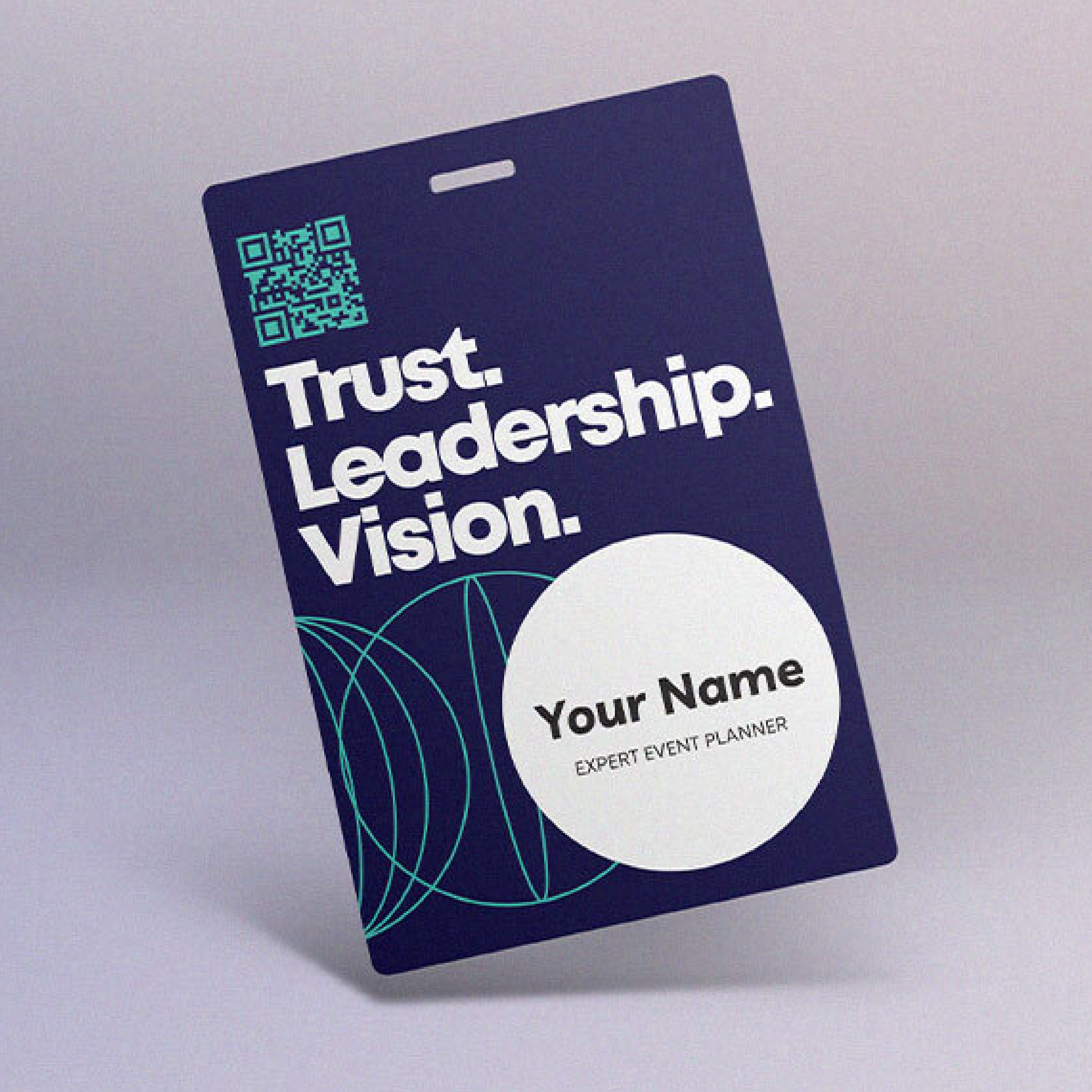
- Brand-forward design: The badge is part of the event identity, so full-color artwork, campaign themes, and finishes like metallic ink earn their place.
- Known guest lists: Because attendance is usually fixed early, pre-printed names arrive ready to hand out and speed up check-in.
- Department, team, or region: Helpful at internal events where people know the company but not each other.
- Access control: Executive sessions and customer advisory boards may need distinct credentials. Our guide to event security and credentialing covers how to tier access.
For badge ideas built around company meetings, sales kickoffs, and client events, see custom event badges for corporate business events.
If you're moving from one side to the other
Planners who switch from corporate to association work are often surprised by how much of the job is marketing: the event has to sell itself every year. Planners moving the other direction usually find faster decisions but less control over dates and scope. In both cases, the fundamentals carry over: a clear budget, tight vendor contracts, a realistic check-in plan, and a team that knows the run of show.
Whether your event earns revenue or spends it, a clear badge tells every attendee who they're talking to, and that makes every conversation easier to start.
Frequently asked questions
What is the main difference between association and corporate events?
Who pays. A corporate event is funded by the host company to reach a business goal, so it's a cost center. An association event is usually funded by registration fees, exhibitors, and sponsors, and it often needs to produce net revenue for the association, so it's a revenue center.
What is non-dues revenue?
Non-dues revenue is any income an association earns beyond membership dues. Common sources include conference registration, exhibit booth sales, sponsorships, continuing education programs, certification fees, awards programs, and paid content such as session recordings.
Why do associations charge non-members more to register?
The higher non-member rate reflects the value of membership and covers the cost of serving attendees who don't pay dues. It also works as a recruitment tool, because the price difference can make joining the association the better deal.
How far in advance are association conferences planned?
Large association meetings often book venues and hotel blocks several years ahead, especially when they need a convention center. Program planning, including calls for presentations, typically starts nine to twelve months before the event.
Are corporate events or association events harder to plan?
They're hard in different ways. Association events need long-range planning, committee approvals, and marketing to drive voluntary attendance. Corporate events tend to have shorter timelines, late changes from executives, and higher expectations for brand presentation.
How should badges differ for members and non-members?
Use a clear visual marker such as a color band or a printed status line so staff and volunteers can identify members, non-members, and first-time attendees at a glance. Pair color with printed text so the distinction is readable for everyone, including attendees with color vision deficiencies.