
Custom event badges involve more than just names and logos. They include specialized printing methods, materials, sizing, data formatting, and production terminology that can affect both the attendee experience and your event operations. Whether you're planning a conference, trade show, festival, or corporate event, understanding these key terms will help you choose the right badge solution, avoid production issues, and create a smoother, more professional check-in experience.
Custom event badges: materials, printing, and sizes
Badge stock and badge shells
- Badge stock: the raw printable material, paper or thermal-compatible stock used in printers.
- Badge shells: the pre-designed, pre-formatted badge base, pre-printed with your branding; names are added later.
Direct thermal event badges
Direct thermal badges are designed for onsite printing using heat-sensitive material, with no ink or ribbon required. They are ideal for high-volume check-in and variable data printing like attendee names and QR codes. The single and double notch versions are laminated for extra durability; no-notch versions are not.
Paper event badges
Paper event badges are durable, full-color cardstock badges commonly used for pre-printed attendee credentials and vibrant event branding. A popular option for conferences and corporate events that prioritize high-quality graphics and customization.
Plastic event badges
Plastic event badges are premium 30mil laminated plastic credentials designed for durability, multi-day use, and a professional look and feel. Commonly used for festivals, VIP credentials, staff badges, and high-end event experiences.
-
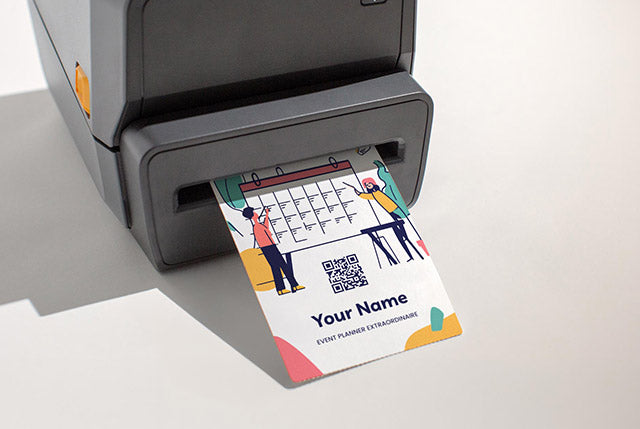 Direct thermal badges
Heat-sensitive, no-ink badges for fast onsite printing. Single and double notch versions are laminated.
Direct thermal badges
Heat-sensitive, no-ink badges for fast onsite printing. Single and double notch versions are laminated.
-
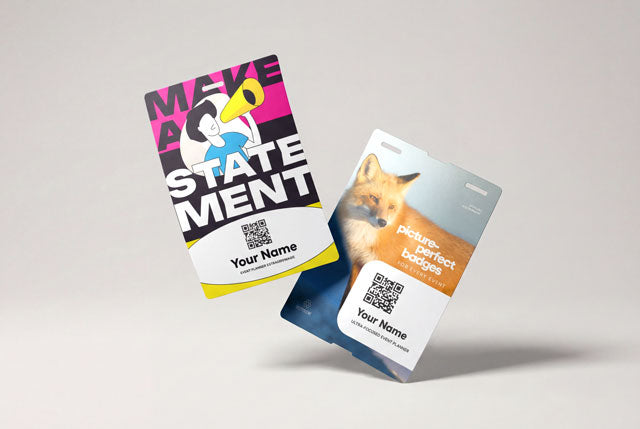 Pre-printed paper badges
Full-color cardstock badges produced in advance with attendee information and event branding.
Pre-printed paper badges
Full-color cardstock badges produced in advance with attendee information and event branding.
-
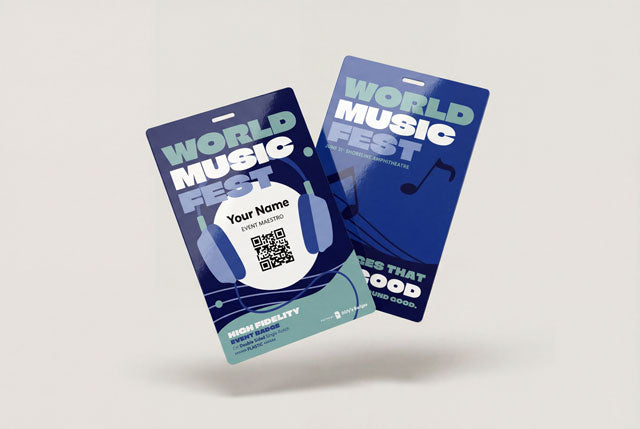 Plastic event badges
30mil laminated plastic credentials built for durability, multi-day events, and a premium feel.
Plastic event badges
30mil laminated plastic credentials built for durability, multi-day events, and a premium feel.
Pre-printed names
Pre-printed names refers to badges produced before the event with attendee information, branding, and design elements already applied. This approach ensures a polished, consistent finish and helps streamline check-in on arrival.
Onsite badge printing
Printing badges onsite is the process of producing badges in real time at the event using direct thermal or similar printing systems. It allows for last-minute updates, walk-in registrations, and variable data printing, names, QR codes, and access levels, for maximum flexibility.
Direct thermal printers
A direct thermal printer uses heat to create images and text directly on heat-sensitive badge material, no ink, toner, or ribbons required. Commonly used for fast, high-volume onsite event badge printing and variable attendee data like names and QR codes.
Direct thermal vs. thermal transfer: Direct thermal printing creates images directly on heat-sensitive material without ink or ribbon. Thermal transfer printing uses a heated ribbon to produce more durable, longer-lasting prints. Better suited for credentials that need to hold up over weeks or months.
Laminate / lamination
Lamination is a thin protective coating applied to event badges that improves durability and resistance to moisture, scratches, and daily wear. It extends badge life while maintaining a clean, professional finish.
Tear-resistant
Tear-resistant badges are made from reinforced materials designed to withstand folding, bending, and heavy event use without ripping. Ideal for multi-day conferences and high-traffic environments.
Edge-to-edge color
Edge-to-edge color printing covers the entire badge surface with full-bleed artwork for a seamless, high-impact design. It enhances branding by eliminating white borders and maximizing visual space.
Common custom event badge sizes
Choosing the right event badge size depends on your event format, branding needs, and the amount of attendee information you need to display. Here are the most popular sizes and the events they work best for.
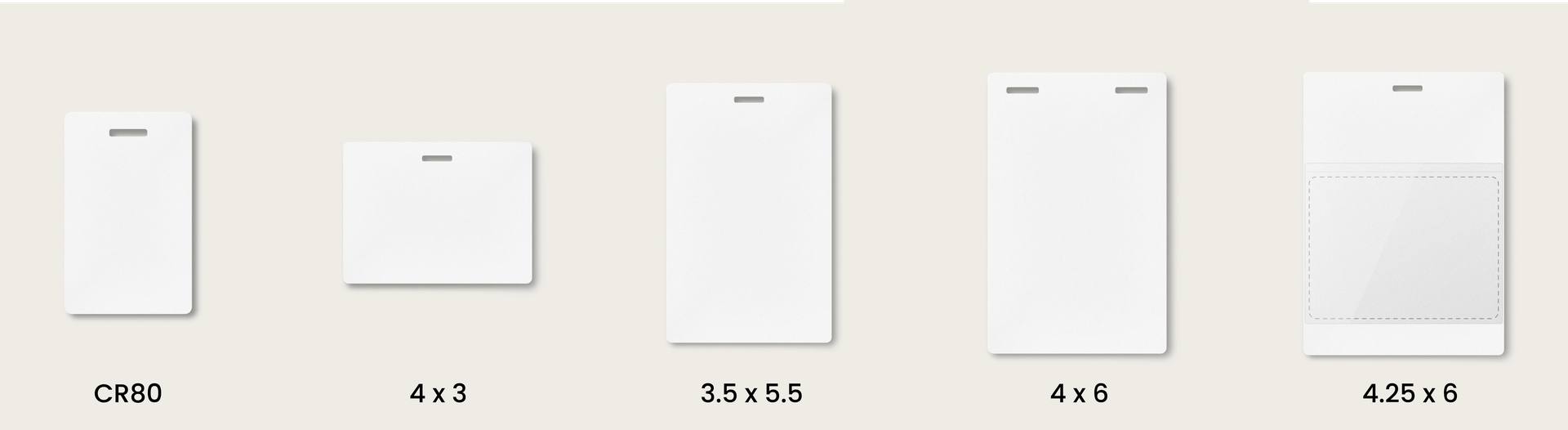
- CR80 (credit card size): A durable, credit card-sized badge for staff credentials, VIP access, and controlled-access events where portability matters more than large-format information.
- 4″ × 3″: A compact, cost-effective size ideal for single-day events and streamlined check-in, with enough room for attendee names and scannable QR codes.
- 3.5″ × 5.5″: A flexible mid-size option that provides more design space than a 4″ × 3″ badge while staying lighter and more compact than a full 4″ × 6″ form.
- 4″ × 6″ (most popular): The most popular size for conferences and trade shows, offering maximum space for names, QR codes, sponsor logos, and schedules while remaining easy to read from a distance.
- 4.25″ × 6″ with adhesive badge holder: A durable plastic badge with an optional 4″ × 3″ adhesive holder (a separate add-on) designed for interchangeable printed inserts, ideal for recurring events and onsite printing with variable attendee data.
Personalized badge lanyards: materials and clips
Event lanyard materials
- Polyester satin: A durable, affordable synthetic fabric with a smooth, comfortable feel, commonly used for vibrant full-color dye sublimation event lanyards.
- rPET (recycled plastic): A sustainable polyester made from recycled plastic bottles, offering the same look and performance as standard polyester with a lower environmental impact.
- Nylon: A strong, slightly glossy synthetic material that resists stretching and wear, ideal for long-term or heavy-use credentials.
- Cotton blends: Natural or mixed-fiber options that provide a softer, fabric-like feel, often chosen for comfort, specialty branding, or alternative aesthetics.
-
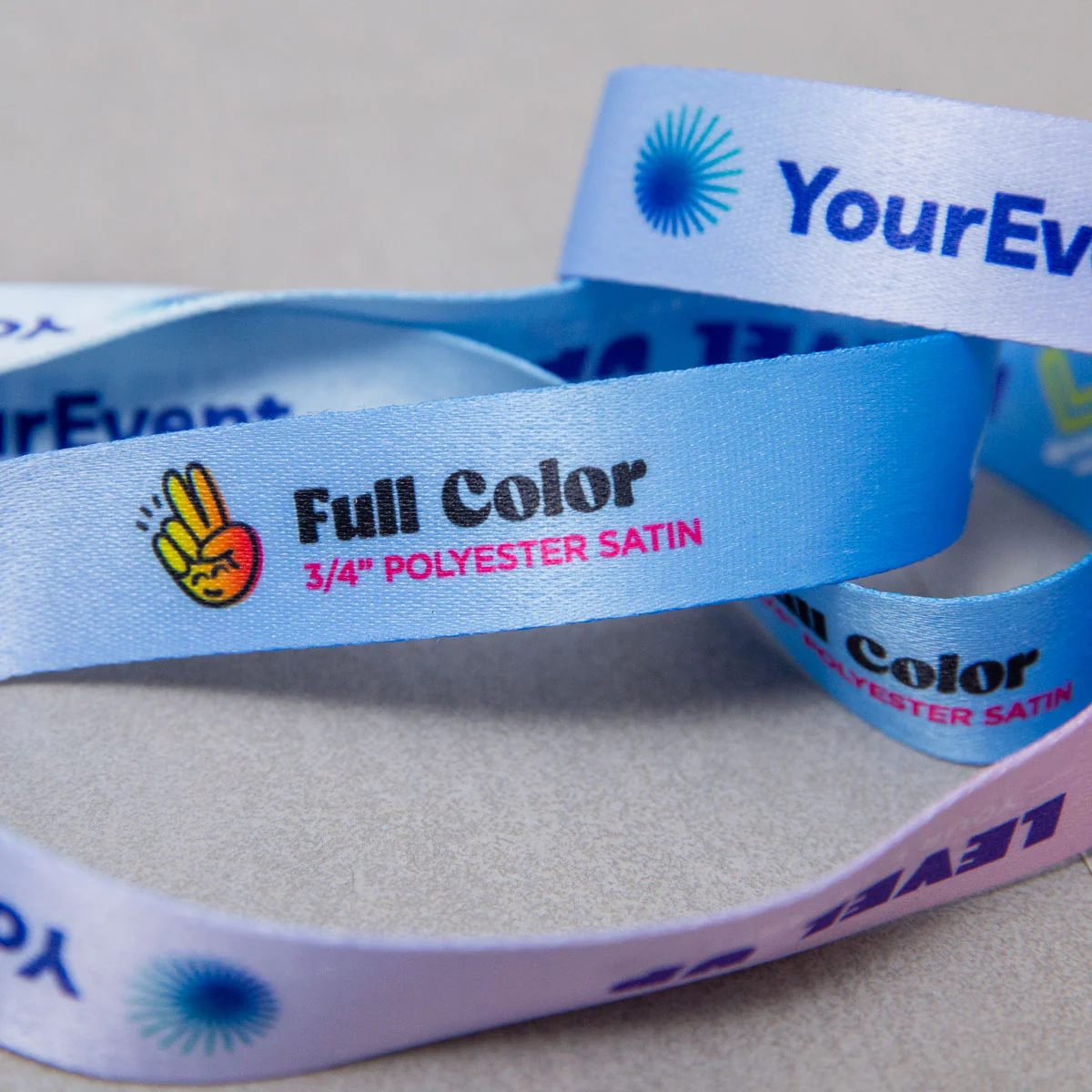 Polyester satin
The most popular conference lanyard, durable, comfortable, and supports full-color dye sublimation printing.
Polyester satin
The most popular conference lanyard, durable, comfortable, and supports full-color dye sublimation printing.
-
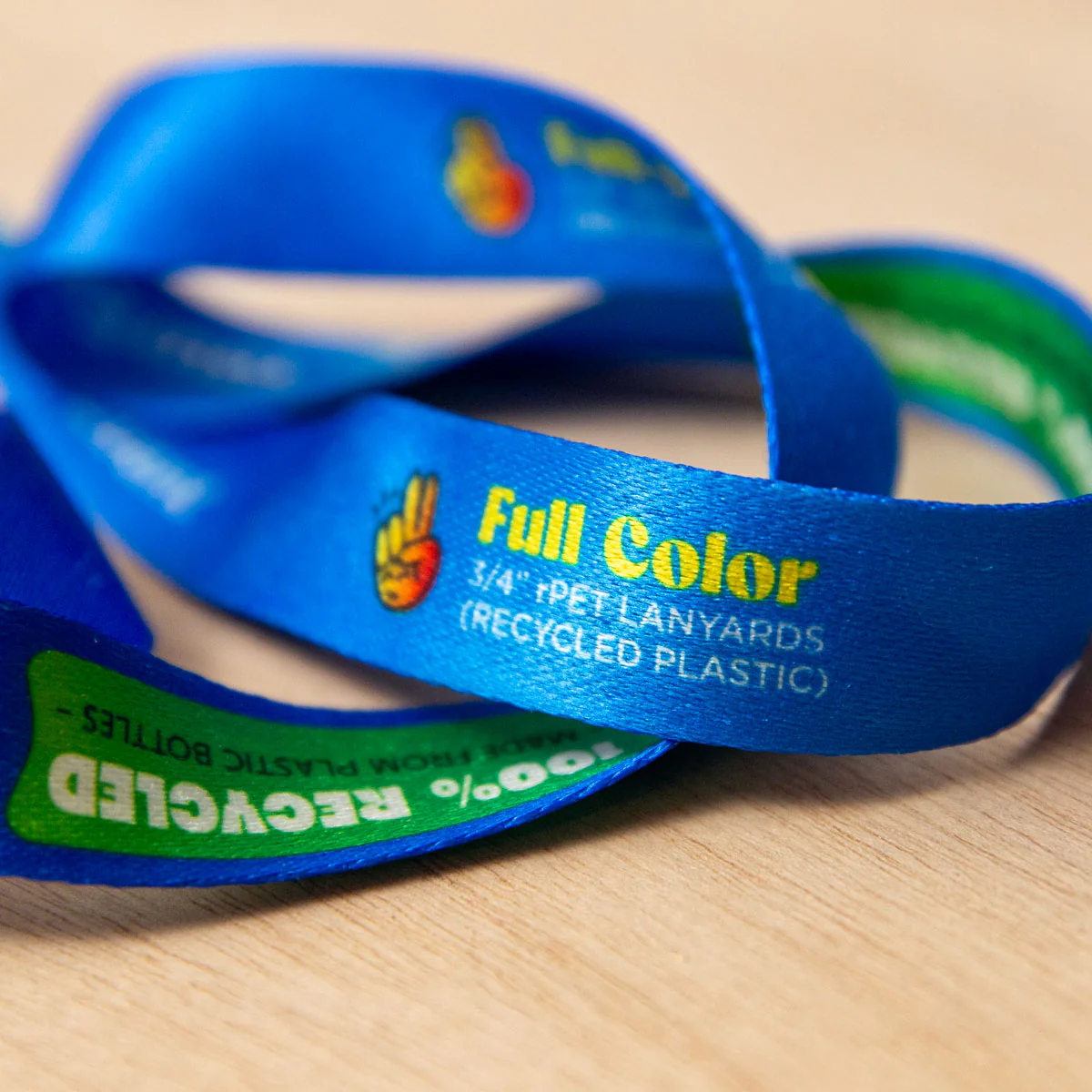 rPET (recycled plastic)
Same feel and print quality as standard polyester, made from recycled plastic bottles.
rPET (recycled plastic)
Same feel and print quality as standard polyester, made from recycled plastic bottles.
Event lanyard attachments
- Crimped attachment: A metal or plastic ferrule compressed tightly around the lanyard material to secure clips or badge attachments. Creates a strong, durable connection ideal for high-volume events and repeated use.
- Sewn attachment: Heavy-duty stitching that permanently attaches clips or hardware to the lanyard strap. Provides a clean, flexible, and highly durable finish that resists pulling and wear during extended event use.
Event lanyard clips
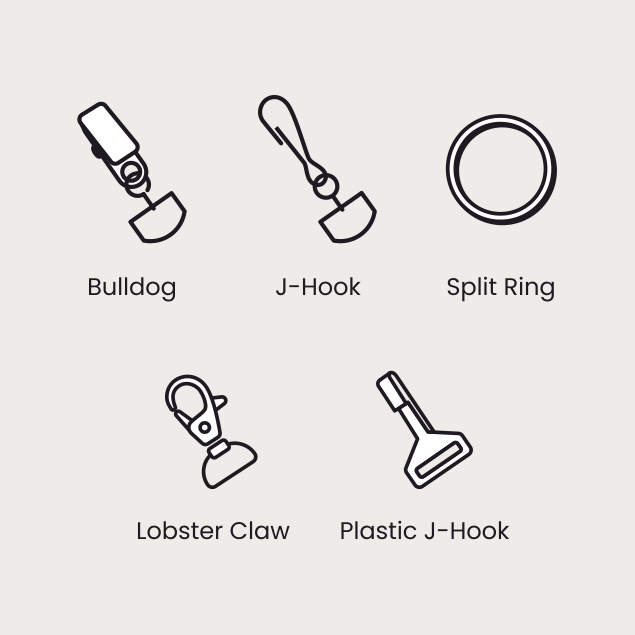
- Bulldog clip (most popular): A flat, spring-loaded metal clip that grips the badge slot securely.
- J-hook: A simple metal hook shaped like a "J" that slides into a badge slot for quick, lightweight attachment.
- Split ring: A small metal ring, similar to a keyring, that threads through a badge hole for a more permanent, tamper-resistant attachment.
- Lobster claw: A swivel metal clasp that snaps onto a badge slot, offering a secure hold with easy attachment and removal.
- Plastic J-hook: A molded plastic version of the J-hook, lightweight and cost-effective for short-term events.
Custom badge lanyard printing methods
- Dye sublimation (full color): A printing process that uses heat to infuse ink directly into the fabric, allowing for full-color, edge-to-edge designs, gradients, and detailed graphics. Produces vibrant, long-lasting prints that won't crack, peel, or fade easily.
- Screen printing: Ink applied over solid-color lanyards with a stencil, suited to simple one-color logos. Our custom lanyards are dye-sublimated instead, for full color that won't crack or peel.
Event badge accessories
Plastic name badge holders and sleeves
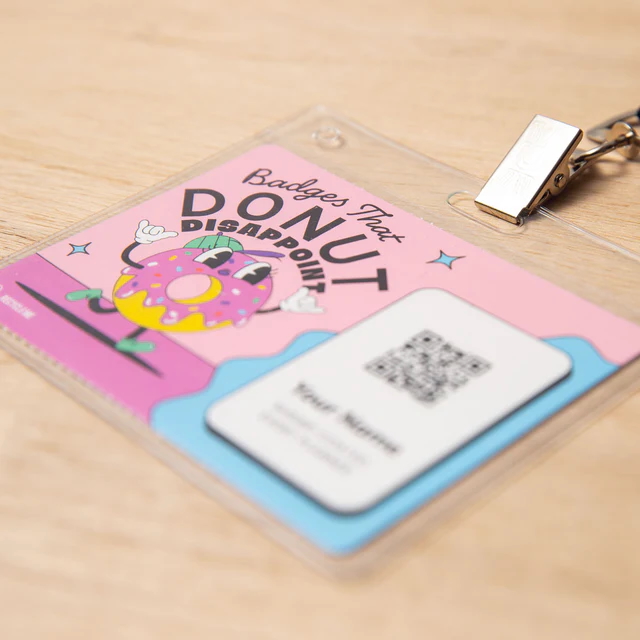
Plastic name badge holders protect and structure paper event badges, and are commonly used for multi-day events. They come in single- or double-notch options and securely hold printed inserts for added durability and functionality.
Additional badge accessories
- Badge ribbons: Small adhesive strips attached to badges to highlight roles, VIP, Speaker, Sponsor, Staff, at a glance.
- Retractable reels: Spring-loaded badge holders that extend and retract, allowing more flexibility when scanning badges.
- Magnetic fasteners: Two-piece magnetic attachments that secure badges through clothing without clips or pins.
- RFID: Radio-frequency identification (RFID) uses electromagnetic fields to create unique tags for contactless scanning via radio waves.
Frequently asked questions
What is the best material for event badges?
The best material depends on event type and duration. Paper and direct thermal badges are popular for short-term events, while plastic badges are preferred for multi-day conferences and reusable credentials.
What size should event badges be?
The most common sizes are 4″ × 6″ and 4″ × 3″. Larger badges provide more space for branding, schedules, and QR codes, while smaller badges offer a cleaner, more compact design.
What is the difference between direct thermal and plastic event badges?
Direct thermal badges are lightweight badges printed using heat-sensitive material for onsite printing. Plastic badges are thicker, more durable credentials designed for extended use and premium event experiences.
What type of lanyard is best for conferences?
Polyester satin lanyards are one of the most popular choices for conferences, they're durable, comfortable, and support full-color branding through dye sublimation printing.
Do event badges need badge holders?
Not always. Some badges include built-in notches for direct lanyard attachment. Others (especially no-notch or insert-style badges, require plastic badge holders or sleeves for support and protection.)
Get samples + save 20% Contact us
Event badge customizations
Number of printed sides
- Single-sided: Printed on one side only, typically used for straightforward attendee information like name, company, and QR code.
- Double-sided: Both sides are printed, allowing for additional information, branding, schedules, or sponsor content without increasing badge size.
Onsite badge printing: printer configuration
Timing marks ("mirrored" or "folded" badges)
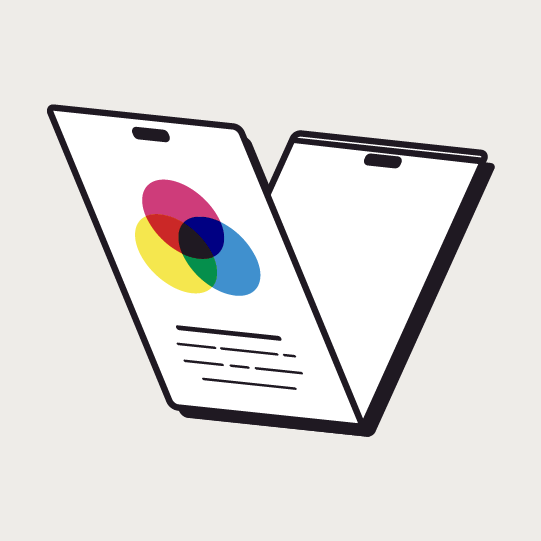
Timing marks are black sensor marks printed on the back of a badge that direct thermal printers use to detect position and ensure precise cutting. These badges are typically printed as two mirrored halves, then folded along a perforation to create a front-and-back credential.
Gap / notch (no, single, and double notch)
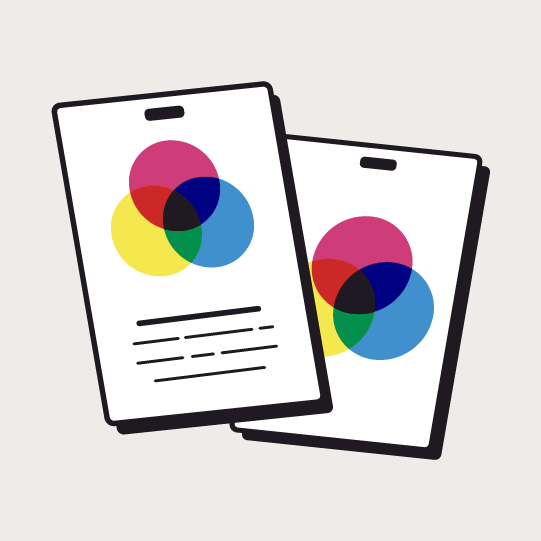
With gap or notch badges, the printer's sensor looks for the gap or notch between badges instead of a printed timing mark. They can still be double-sided: we pre-print both faces, your printer adds names to the front only, and the back is the same on every badge. To print both sides on site, choose timing marks (folded).
Fan-fold
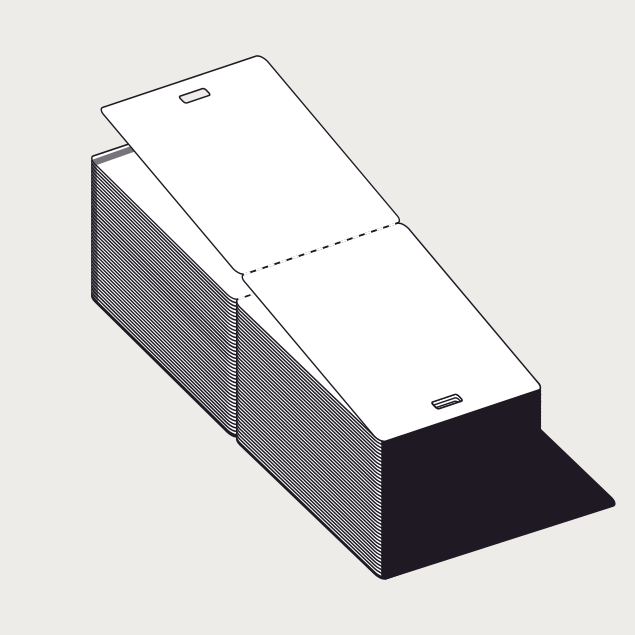
Fan-fold refers to the accordion-style stacking format used for event badges that feed continuously through a printer during onsite printing. This format enables fast, efficient high-volume printing and organized badge handling.
Event badge notch selection
- No notch: Requires a separate holder or sleeve. Commonly used for plastic cards or insert-style badges, and often paired with 4″ × 3″ inserts to maximize print space and flexibility.
- Single notch: The most common configuration. Designed for single-attachment lanyards and easy badge flipping, ideal when the back includes additional information like agendas or instructions.
- Double notch: Made for double-attachment lanyards that keep the badge facing forward at all times. Best for roles like exhibitors or staff where constant front visibility, name, role, access level, matters.
-
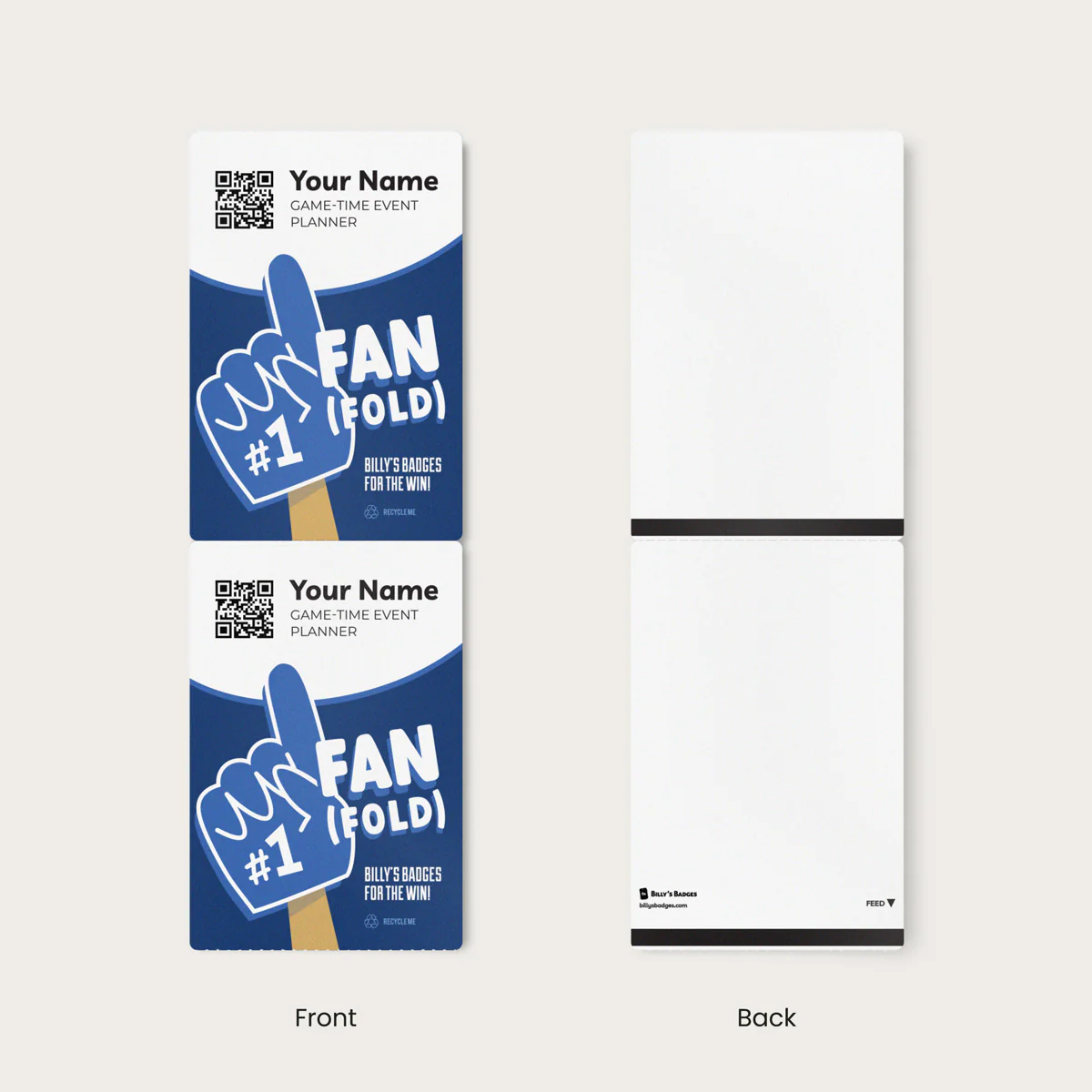 Single-sided, timing marks, no notch
-
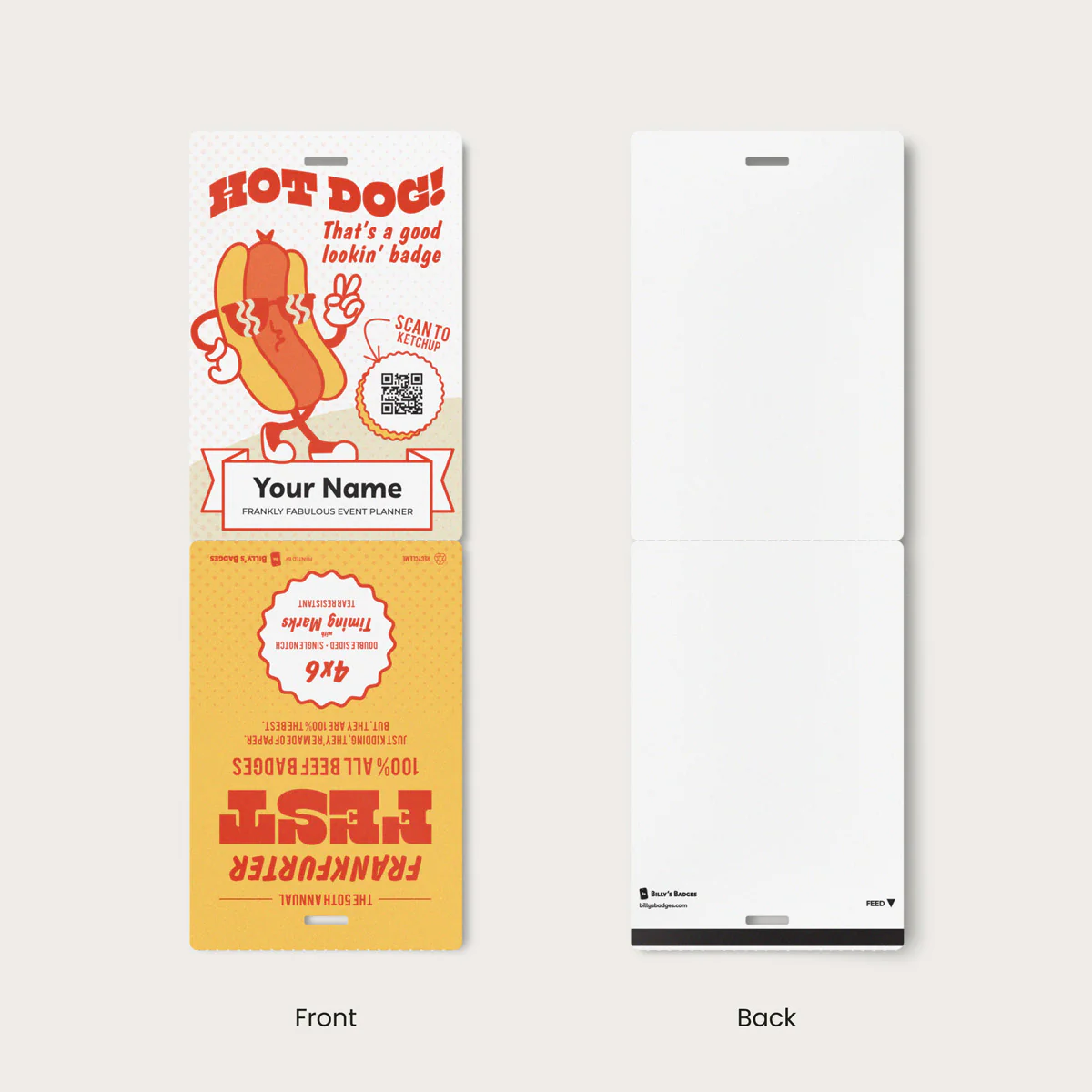 Double-sided, timing marks, single notch
-
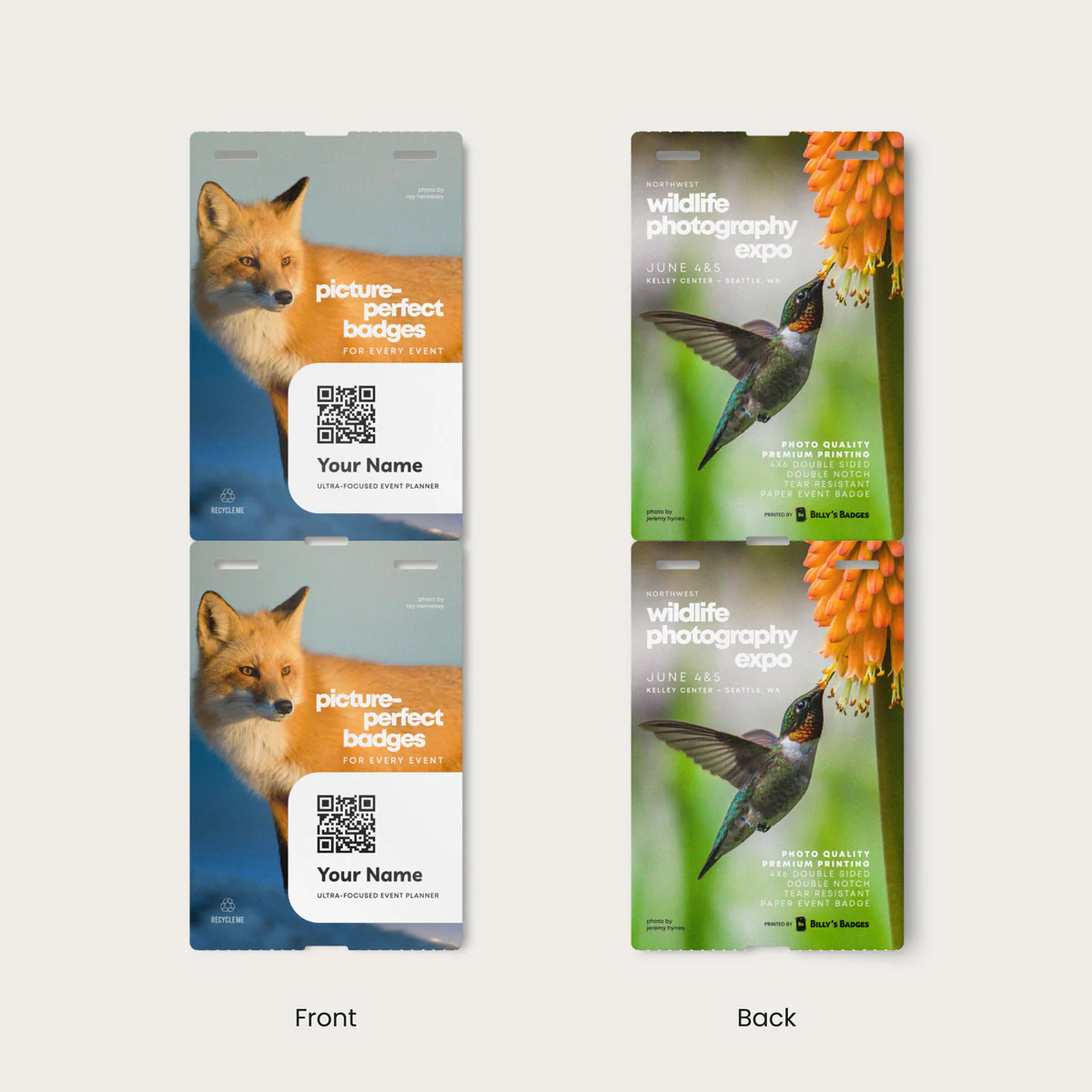 Double-sided, gap/notch, double notch
Specialty ink and background
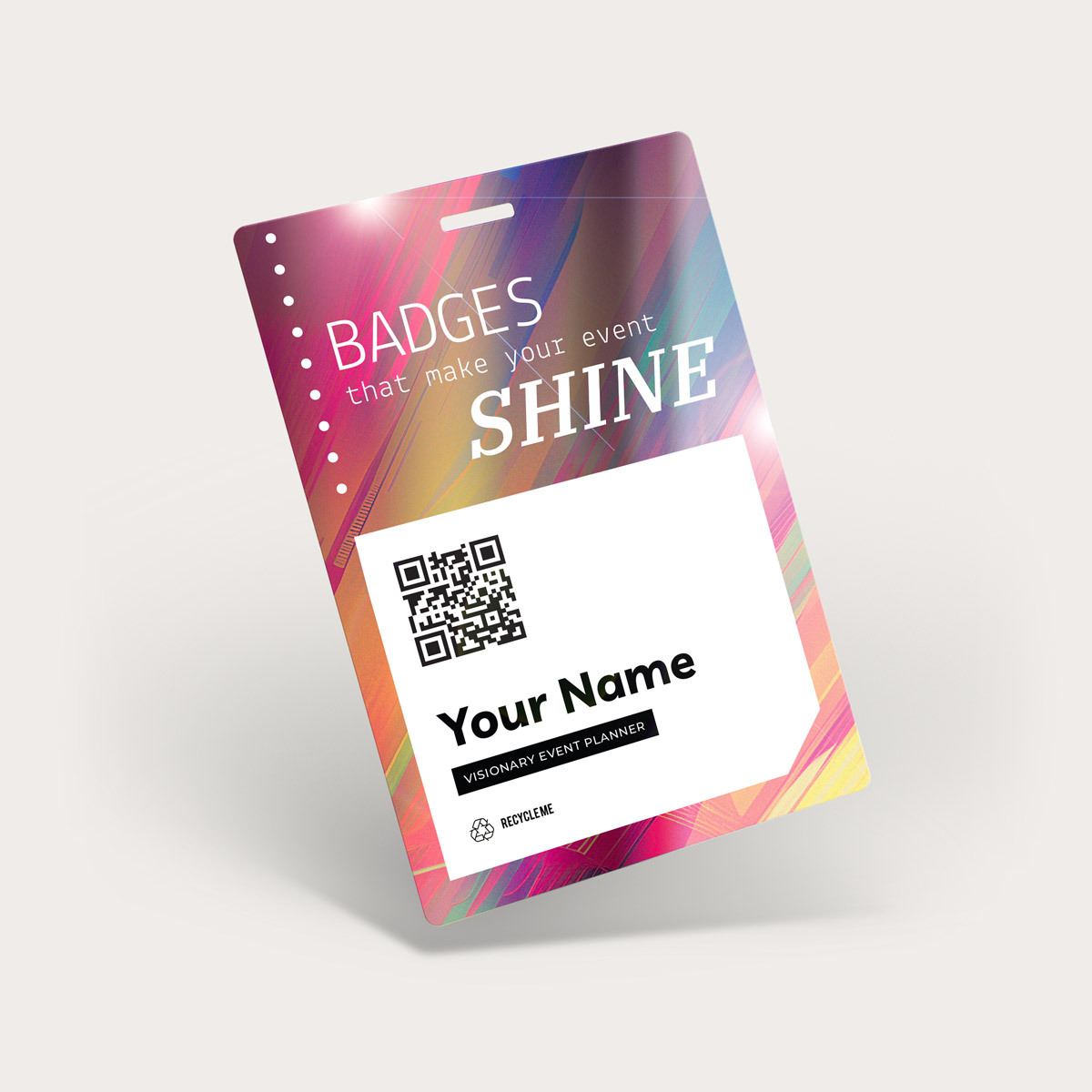
Metallic ink adds a shimmery finish to specific areas of an event badge for premium visual impact. It is applied using a dedicated vector layer that directs the printer where to place the metallic effect.
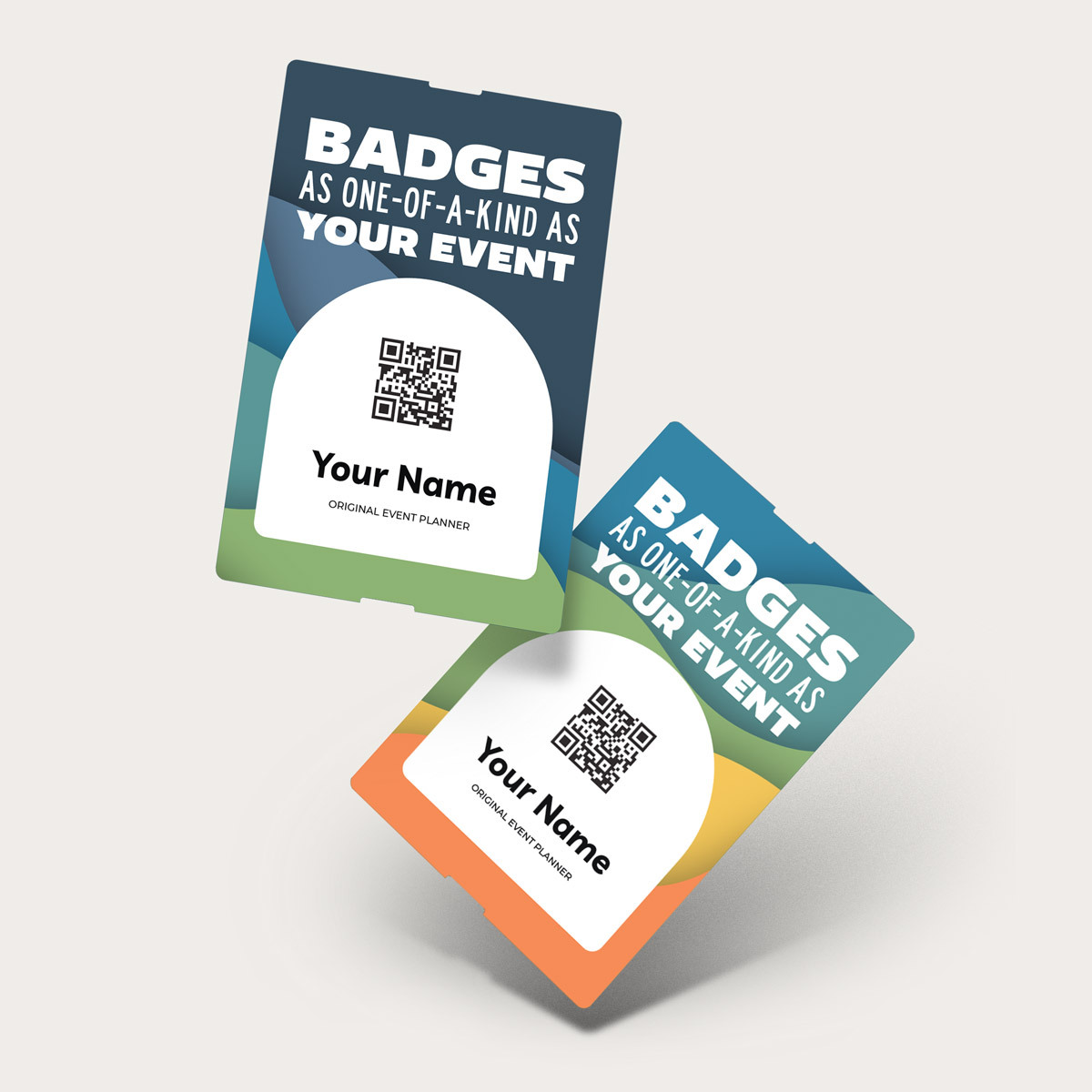
Mosaic background is a design layer that introduces subtle variation across badges through randomized scaling, rotation, and positioning. Each badge stays on-brand while appearing slightly unique within the same overall design system.
Frequently asked questions
What is the difference between single notch and double notch event badges?
Single notch badges attach to one clip and can flip easily, while double notch badges attach at two points to keep the badge facing forward for better visibility and scanning.
Can event badges be printed on both sides?
Yes. Double-sided event badges allow additional space for schedules, sponsor branding, maps, or attendee information without increasing the badge size.
What are metallic ink and mosaic background effects on event badges?
Metallic ink adds a reflective, foil-like finish to specific design elements for a premium look. Mosaic backgrounds create subtle variation between badges by randomizing design positioning and scaling.
Production and shipping
Custom name badge and lanyard artwork guidelines
Proper artwork setup is essential for producing sharp, accurately aligned event badges. Understanding file formats, resolution requirements, bleed areas, trim lines, and safe zones helps ensure your designs print cleanly, maintain color accuracy, and avoid common production issues.
- Scale: The proportional sizing of all design elements to ensure text, logos, and graphics remain clear, balanced, and legible at the final badge size, and that nothing distorts when artwork is resized for production.
- Die-lines: Pre-defined cut guides that indicate exactly where a badge will be trimmed or shaped after printing, ensuring consistent sizing, accurate alignment, and clean edges.
- Preferred file types: Submit vector artwork in SVG or PDF format whenever possible. Vector files scale without losing quality and produce the sharpest printed results.
- Accepted file types: We accept SVG, PDF, JPEG, and PNG. PDF is preferred for production-ready artwork.
- Raster artwork requirements: Non-vector files like JPEG or PNG require a minimum resolution of 300 DPI to prevent pixelation.
- Color mode (CMYK): Submit designs in CMYK color mode for accurate print color matching and to avoid shifts between screen and printed output.
- Bleed area (4.25″ × 6.25″): Extends 0.125″ beyond the trim on all sides. Background colors and images should extend into this area to prevent white edges after cutting.
- Trim size (4″ × 6″): The final finished dimension after cutting. All key design elements should be positioned with this size in mind.
- Safe area: The interior zone where all critical content, logos, names, QR codes, must be placed to ensure nothing is cut off during trimming. It depends on the badge type and notch, so use the template for your exact size.
Artwork guidelines: frequently asked questions
What file format is best for event badge printing?
Vector files such as SVG and PDF are the preferred formats because they scale without losing quality and produce the sharpest printed results.
What resolution should event badge artwork be?
Raster files like JPEG or PNG should be submitted at a minimum of 300 DPI to ensure clear text, sharp graphics, and professional print quality without pixelation.
What are bleed and safe areas in badge design?
The bleed area extends beyond the final trim size to prevent white edges after cutting. The safe area keeps critical content (names, logos, QR codes) away from the edges so nothing gets accidentally trimmed during production.
Learn more about artwork setup
How custom name badges and lanyards are made
- Proof: A digital preview of your event badge design sent for approval before production begins. It ensures all artwork, text, and variable data are correct before printing.
- Variable data printing (VDP): The process of customizing each badge with unique information, attendee names, companies, QR codes, or access levels, from a data file.
- Data file (CSV): A CSV (comma-separated values) file is a spreadsheet format used to upload attendee information for badge personalization and variable printing.
- Batch printing: Producing badges in groups or scheduled runs, often used for large events with staggered registration or multiple badge versions.
- Turnaround time: The total production time required to print and prepare badges before they ship, excluding transit time.
- Rush production: A shorter turnaround than standard, sometimes possible depending on the job and our schedule. Our team confirms, and a rush may carry an added fee.
How custom name badges and lanyards are shipped
- Ground shipping: Standard, cost-effective delivery via land, typically 1–5 business days transit time.
- UPS Next Day Air®: Overnight delivery, typically by 10:30 AM the next business day.
- UPS Next Day Air® Saver: A more economical overnight option, delivers by the end of the next business day, typically later in the day than standard Next Day Air.
- UPS Next Day Air® Early: The fastest overnight option, delivers early in the morning for urgent event timelines.
Production and shipping: frequently asked questions
What is included in event badge production?
Event badge production includes artwork setup, proofing, variable data processing, printing, finishing, and packaging before shipping.
What is a CSV file for event badges?
A CSV file is a spreadsheet used to upload attendee data (names, companies, QR codes) for personalized badge printing.
How long does it take to produce custom event badges?
Badge production typically takes 5 business days after proof approval, plus shipping. A shorter turnaround is sometimes possible depending on the job and our schedule.
What is rush production for event badges?
Rush production means a shorter turnaround than our standard 5 business days after proof approval. It is sometimes possible depending on the job and our schedule; our team confirms, and a rush may carry an added fee.
What shipping method is best for event badges?
Ground shipping is the most cost-effective option. UPS Next Day Air® options are best for urgent deliveries where badges must arrive before the event date.
From material choice to print configuration to same-day shipping options, every decision shapes the attendee experience. The right badge setup reflects the professionalism of your event from the very first scan.