
Custom event badges are more than pieces of plastic or cardstock worn at conferences and gatherings — they're powerful tools in the event management toolkit. A well-designed badge serves as a personal identifier and enhances networking, security, and the overall attendee experience.
This guide breaks down the anatomy of an event badge — the material, size, layout, security features, and accessories — and how each component shapes a successful event.
Choose your event badge style
Material
The material of your badge depends on the event type and duration. Multi-day conferences often require durable materials, while single-day or informal events can use more lightweight options. Incorporating sustainable materials also helps reduce the environmental impact of your event.
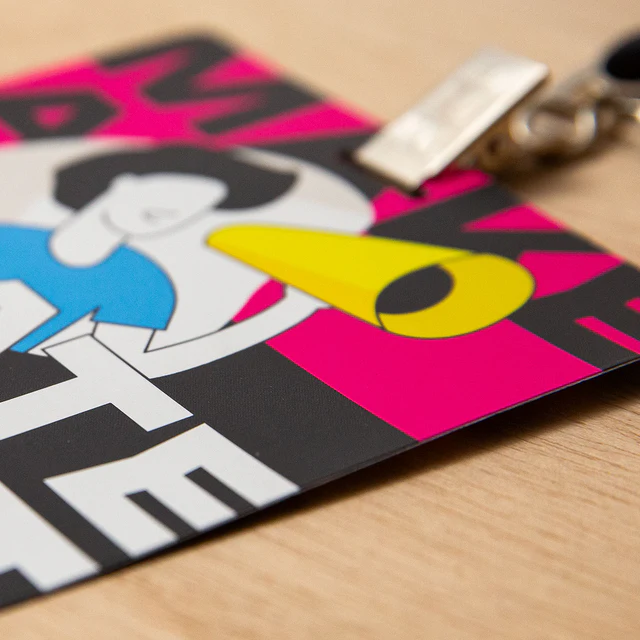
Paper custom event badges are lightweight, cost-effective, and eco-friendly. They're a popular choice for shorter events or when you don't need to fit a lot of information on the badge itself.
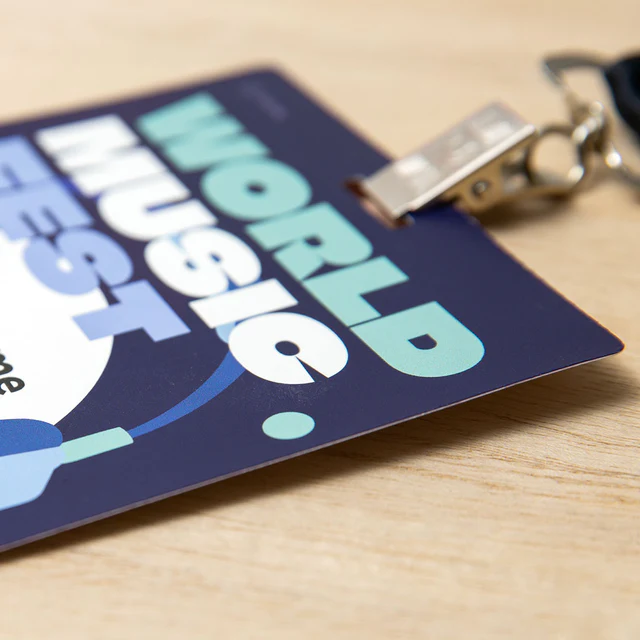
Plastic custom event badges are durable and waterproof — a good fit for multi-day events or outdoor settings. They cost slightly more than paper and are less eco-friendly, so weigh trade-offs against your event's needs.
Size
Badge size plays a role in both visibility and comfort. Standard rectangular badges are the most popular shape. Common sizes include 4×3 or 4×6 inches, offering enough space for essential details while keeping the design balanced.
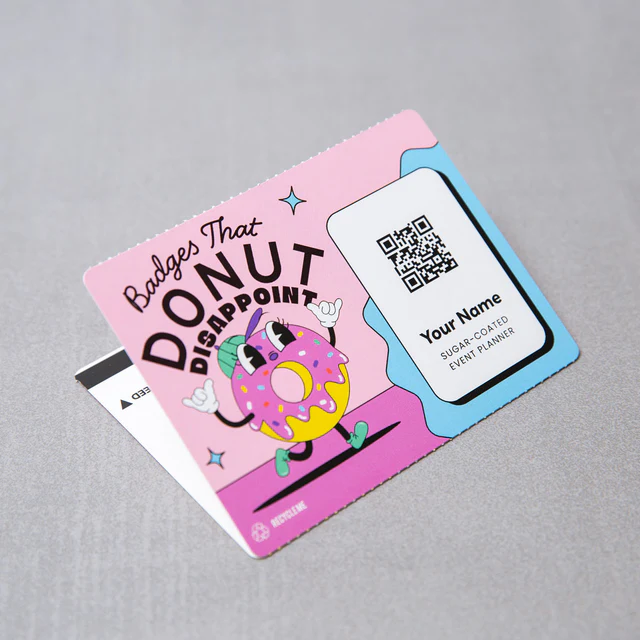
4×3 paper event badge — lightweight, cost-effective, and easy to recycle. Best for shorter events or when minimal information needs to fit on the badge.
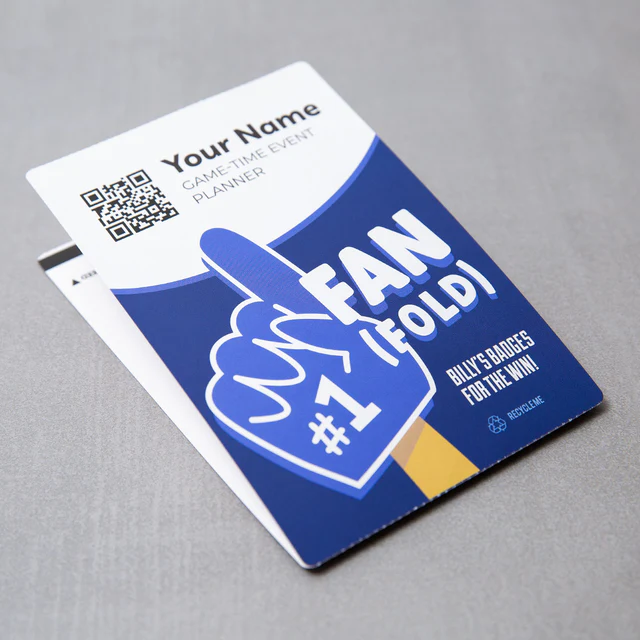
4×6 paper custom event badge — the most popular size. Ample space for information and branding while staying lightweight, cost-effective, and eco-friendly.
Single-sided vs. double-sided
Choosing between a single-sided or double-sided badge depends on the needs of your event and how you want to display information.
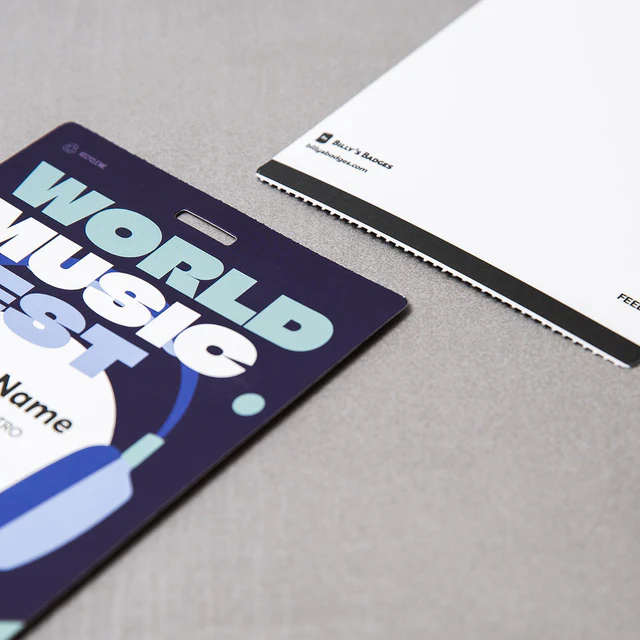
Single-sided badge — printing on one side only. Suitable for displaying essential information like name, affiliation, and event access details. Lower cost.
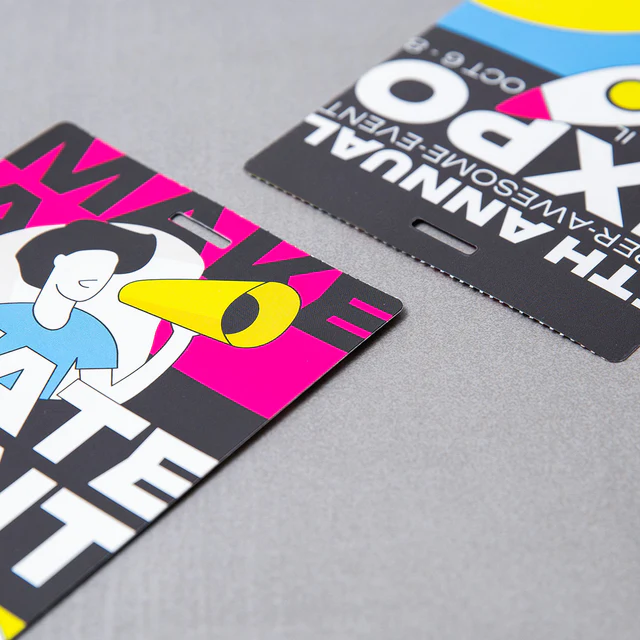
Double-sided badge — printing on both sides. Ample space for event schedules, sponsor logos, social media handles, or QR codes for interactive engagement. Also useful when the badge flips on the lanyard so the information is always visible.
Pro tip: Consider your event flow, attendee engagement, and design goals when making this decision.
Notches
Notches affect how a badge sits and rotates on the lanyard. Three configurations are common.
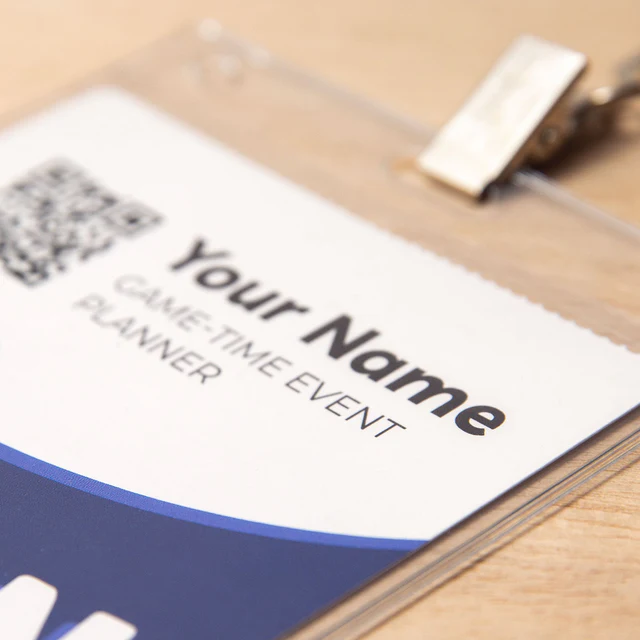
No notch — some organizers prefer a sleeve without notches on the badge itself. If you choose this option, you'll need badge holders to attach to the lanyard.
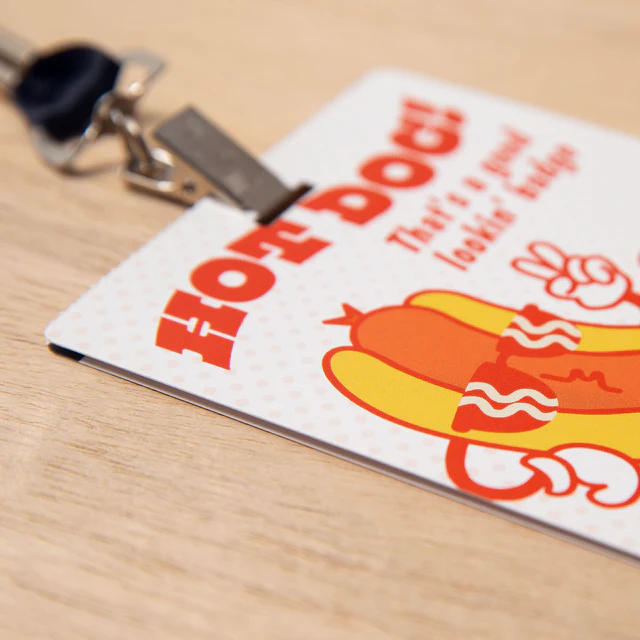
Single notch — organizers who want a design on both sides typically opt for a single notch, allowing the badge to flip back and forth naturally on the lanyard.
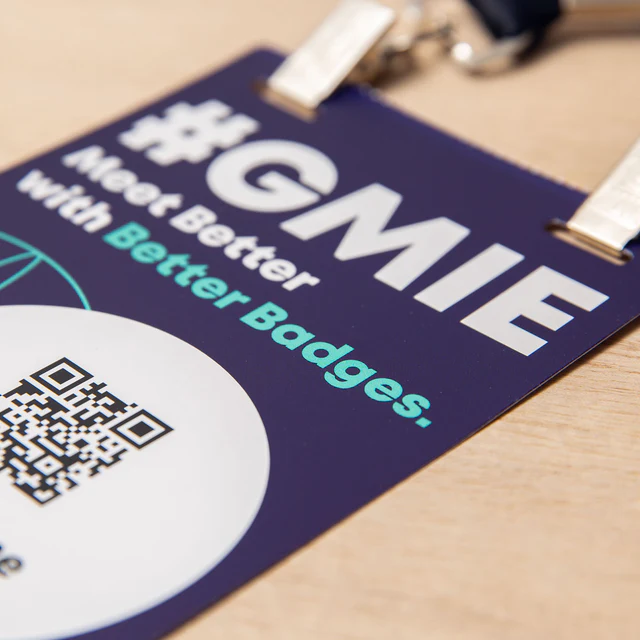
Double notch — some prefer double notches to prevent rotation entirely, especially if the back of the badge is blank or you want the front to always face forward.
On-demand vs. pre-printed badges
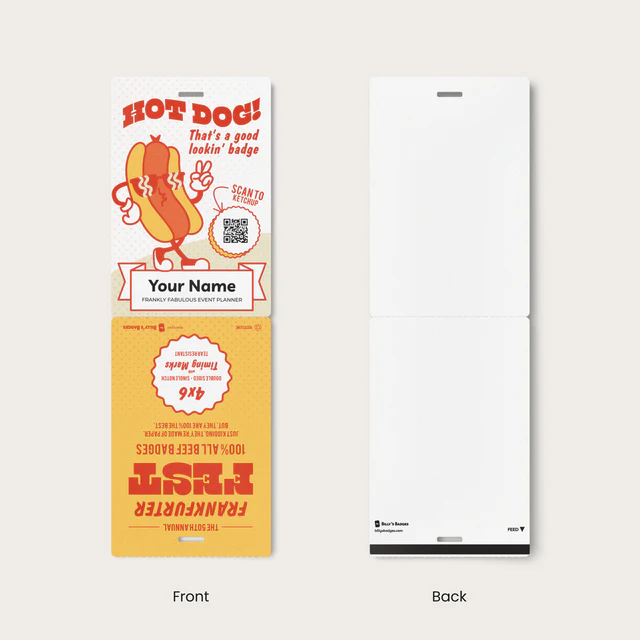
On-demand event badges use specialized printers, allowing immediate updates and personalization at check-in. Best for dynamic environments where last-minute attendee changes are common.
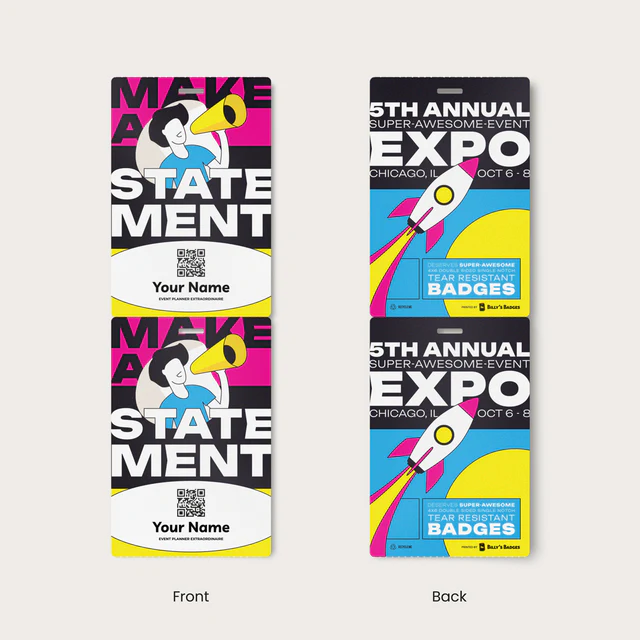
Pre-printed event badges are produced in bulk before distribution, with pre-designed templates and space for personalization. Lower per-badge cost when your attendee list is finalized in advance.
Determine information layout
What you choose to include on a badge should provide immediate value and recognition. The layout must be clear and organized, ensuring easy readability from a few feet away.
- Attendee's name: The most prominent piece of information — specifically the first name.
- Role or title: Helps identify each attendee's role within the event. Useful for networking.
- Organization: Including the attendee's company aids networking and personal identification.
- Event branding: Logos and event colors should be incorporated without overwhelming the essential information.
- Sponsorship: If applicable, sponsor logos or branding can be included — kept subtle so they don't distract from the attendee's details.
Add security features
To prevent counterfeiting and unauthorized access, include security features in your badge design.

Invisible ink — adds an extra layer of security for exclusive access areas. Specialty ink only visible under UV light.
QR codes — make each badge unique and verifiable at entry. Essential for lead retrieval and attendance tracking.
Photo identification — for high-security events, including a photo helps personnel quickly verify the badge holder's identity.
Include accessories
The choice of lanyard and badge holder reflects the event's branding while improving attendee comfort and experience. Selecting the right materials also supports sustainability goals.
Event lanyards
Lanyards should be sturdy, comfortable, and customizable with colors, logos, or slogans to enhance brand visibility.
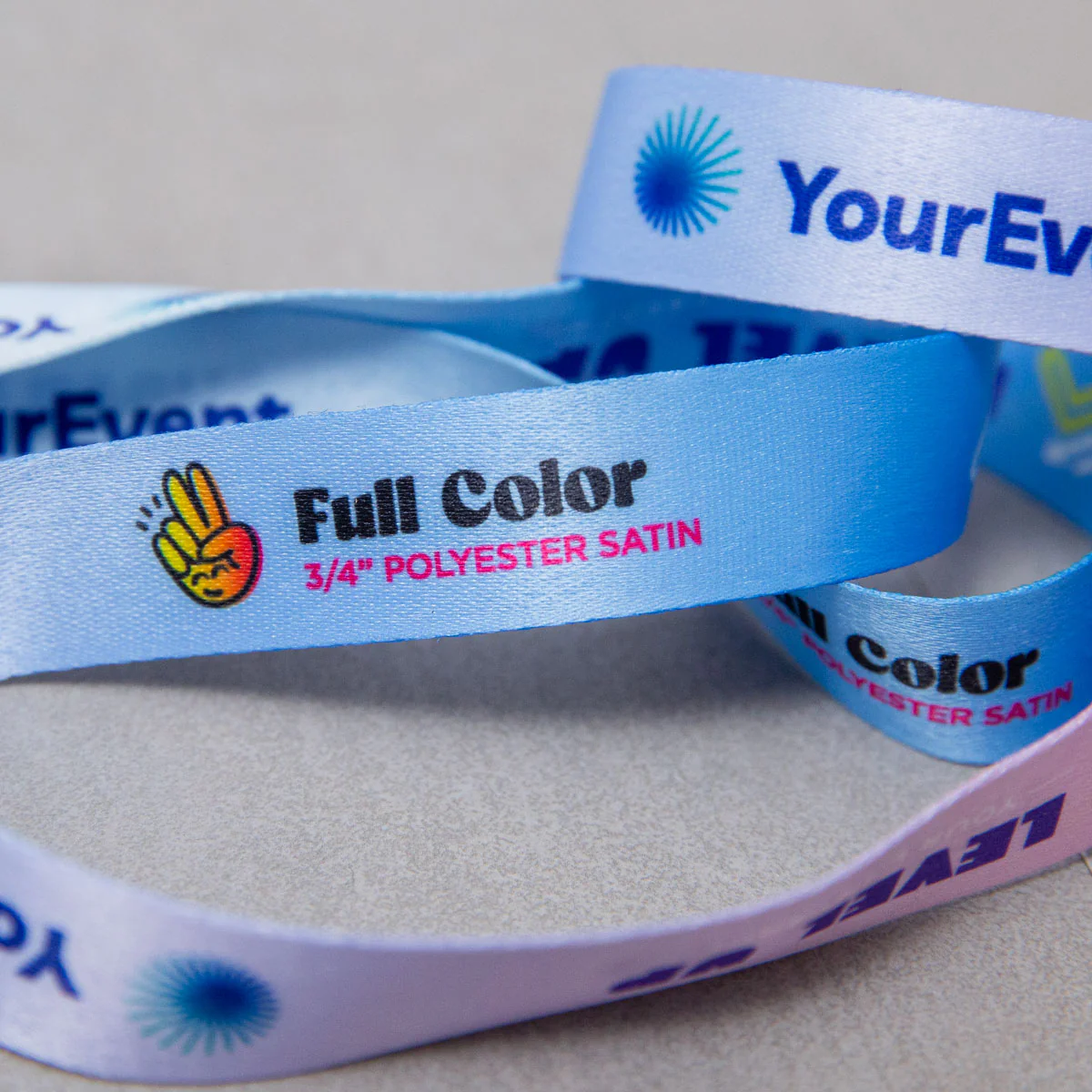
Polyester satin lanyards — smooth and durable with a soft, high-quality finish. Sleek, professional look.
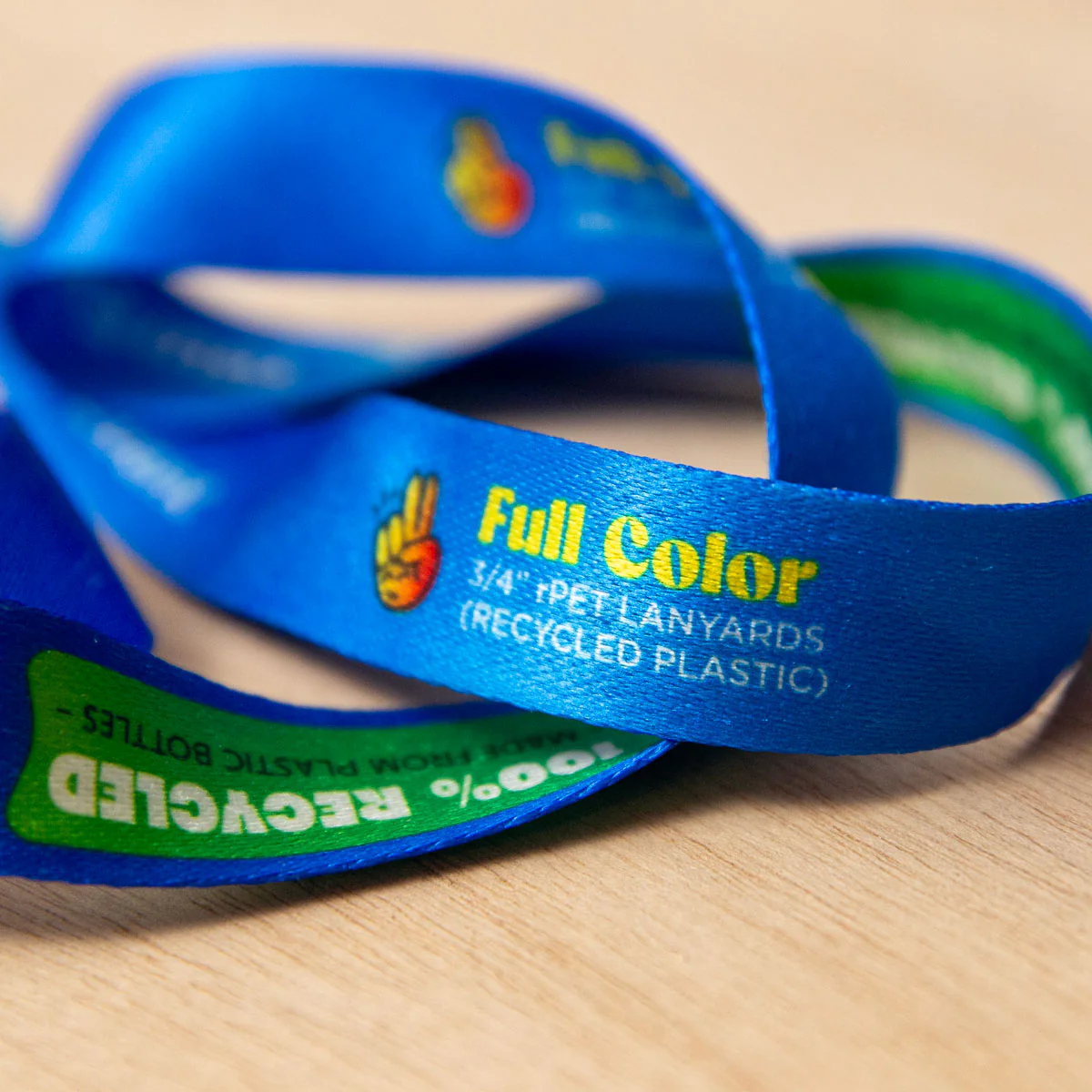
Recycled (rPET) lanyards — made from recycled plastic bottles. Eco-friendly without compromising strength or comfort.
Badge holders
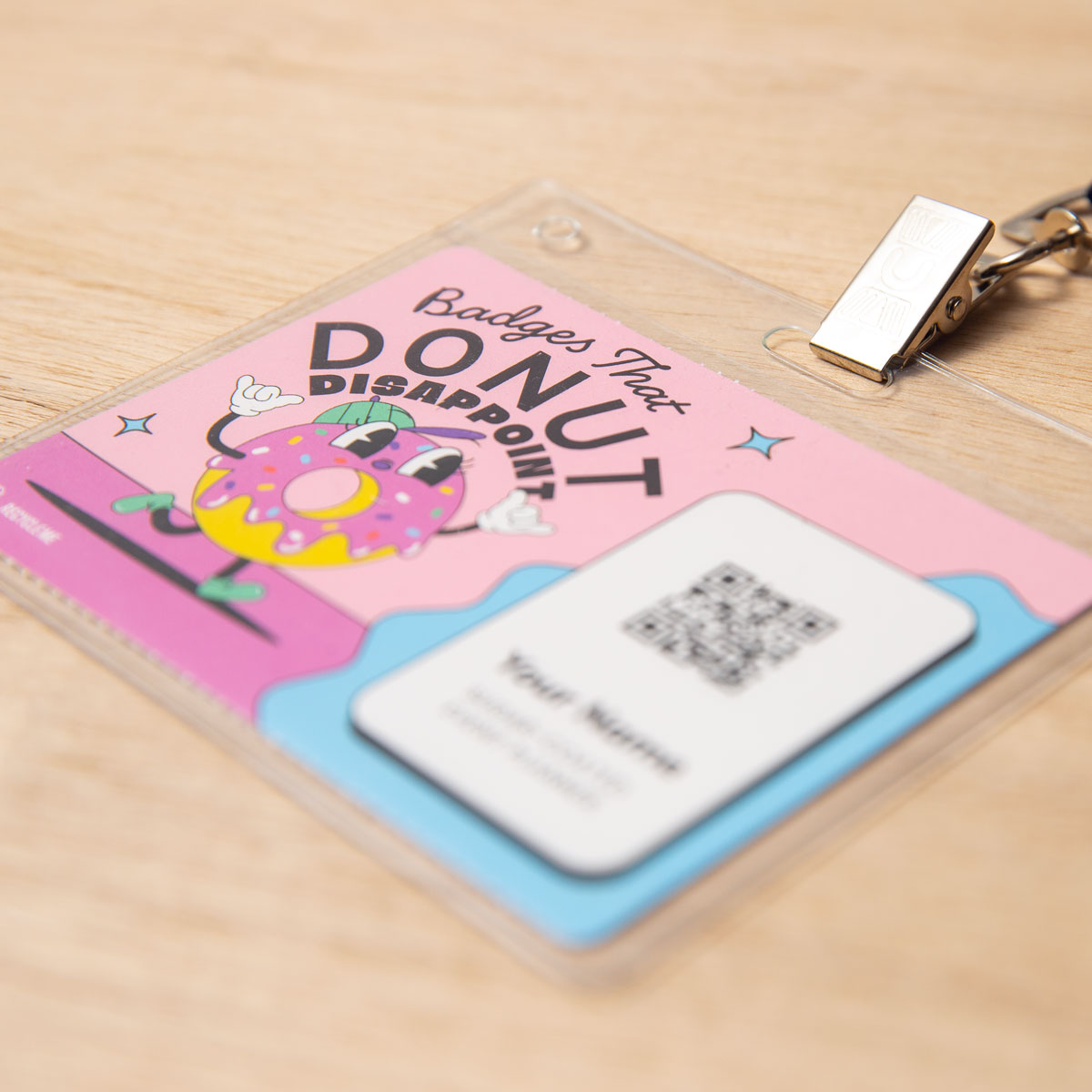
Our conference badge holders protect badges from wear while providing a clear display. Made from recyclable soft PVC, contributing to a greener event experience. Badge holders are required for no-notch badges.
Design tips
When designing custom event badges and lanyards, balance aesthetics with functionality. Three principles guide the work.
- Keep it simple: Avoid clutter. Use clear, readable fonts and ensure key information is immediately accessible.
- Be consistent with branding: Use colors and logos that reflect the event or sponsoring organization's brand identity.
- Prioritize functionality: Ensure the badge serves its primary purposes — identification and access — effectively.
The design of a custom event badge involves careful consideration of material, size, functionality, and security. A well-thought-out badge improves the practical side of event management and enhances the attendee experience, making your event more memorable.