
When it comes to event check-in, your badge is more than identification — it's the first expression of your brand. Whether you're planning a corporate conference, trade show, association meeting, or large-scale festival, choosing the right custom event badge and lanyard vendor directly impacts check-in speed, attendee experience, and operational flow. If you're printing on-site with direct thermal printers, material and printer compatibility are critical to keeping lines moving and technology running smoothly.
Custom event badges aren't just functional. They spark conversations, reinforce branding, and often become keepsakes long after the event ends. From conference classics to trade show throwbacks, badges tend to live on in desk drawers, memory boxes, and office bulletin boards — small pieces of cardstock or plastic carrying big memories.
The right badge partner helps you create designs that look sharp, scan cleanly, and hold up all day while reflecting your event's identity. When event day arrives, reliability, technical compatibility, print quality, and responsive support matter far more than price alone.
1. Verify software compatibility
Your badge vendor must work seamlessly with your event registration and check-in software. Even high-quality badges can fail if the layout, data fields, or print settings aren't aligned with your platform.

Before selecting a vendor, confirm:
- Dimension match: Do badge dimensions match your software's print templates?
- Variable data: Does the vendor understand variable data and field mapping?
- Scan formats: Are QR codes and barcodes formatted for your scanning system?
- Prior integration: Have they worked with your specific registration platform before?
The smoother the integration between your event software, printers, and badge materials, the faster and more professional your on-site check-in experience will be.
2. Confirm printer compatibility
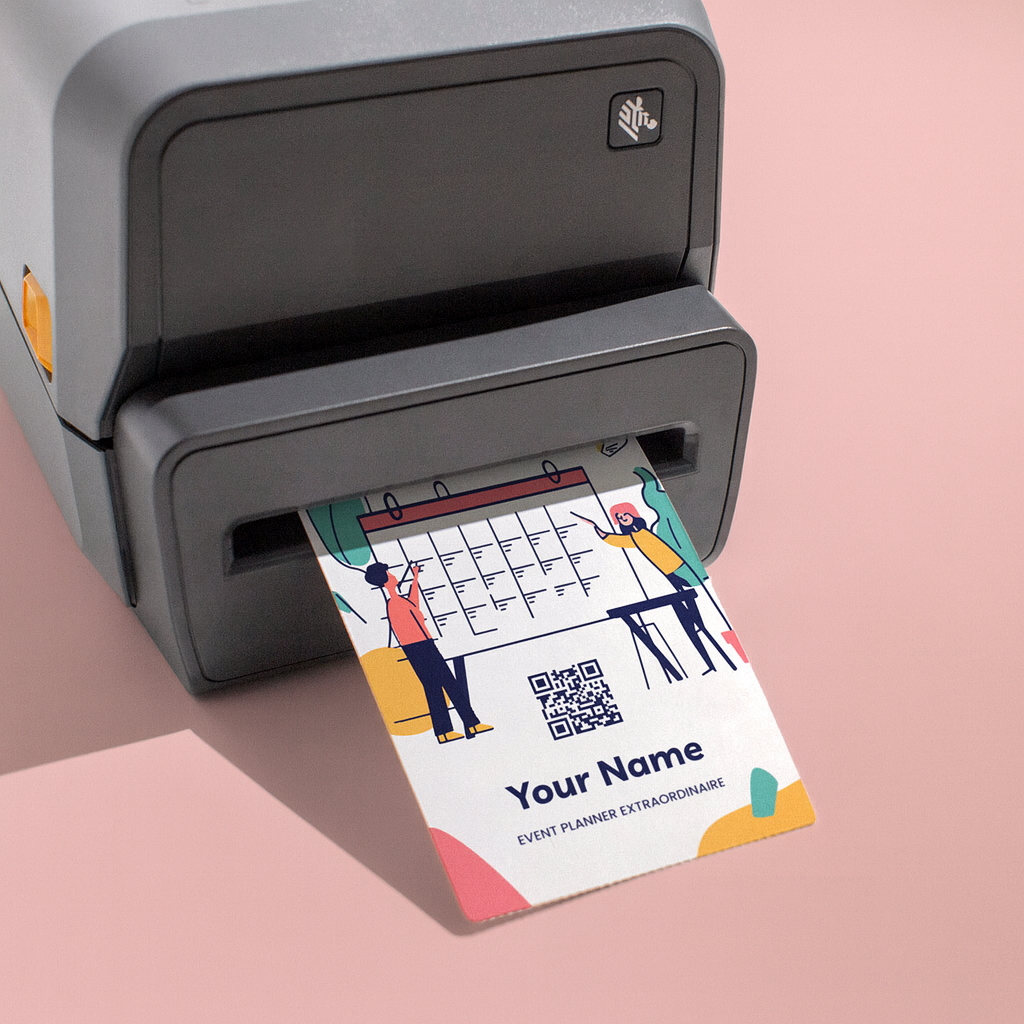
If you're printing on-site, compatibility with direct thermal printers is non-negotiable. Poor-quality badge stock causes fading, feed issues, and printer jams.
Before committing, ask:
- Designed for direct thermal: Is the badge stock engineered for direct thermal printing?
- Tested with your equipment: Have the badges been tested with your printer model?
- Sample availability: Can you receive samples to test on your own equipment first?
Testing in advance prevents check-in disruptions and protects your equipment investment.
3. Evaluate material options
A strong vendor offers both paper and plastic options. Different events call for different solutions, and flexibility lets you scale across your entire event calendar without being locked into one format.
- Paper: Best for high-volume, single-day events.
- Plastic: Best for multi-day or premium programs.
- Specialty stock: Tear-resistant or moisture-resistant options for outdoor and high-wear environments.
- Custom sizes: Layouts beyond the standard 4″ × 3″ or 4″ × 6″ for distinctive event branding.
Paper vs. plastic event badges
Most professional badge vendors offer two core materials: direct thermal paper badges and durable plastic badges. The right choice depends on your event format, duration, and on-site printing setup.
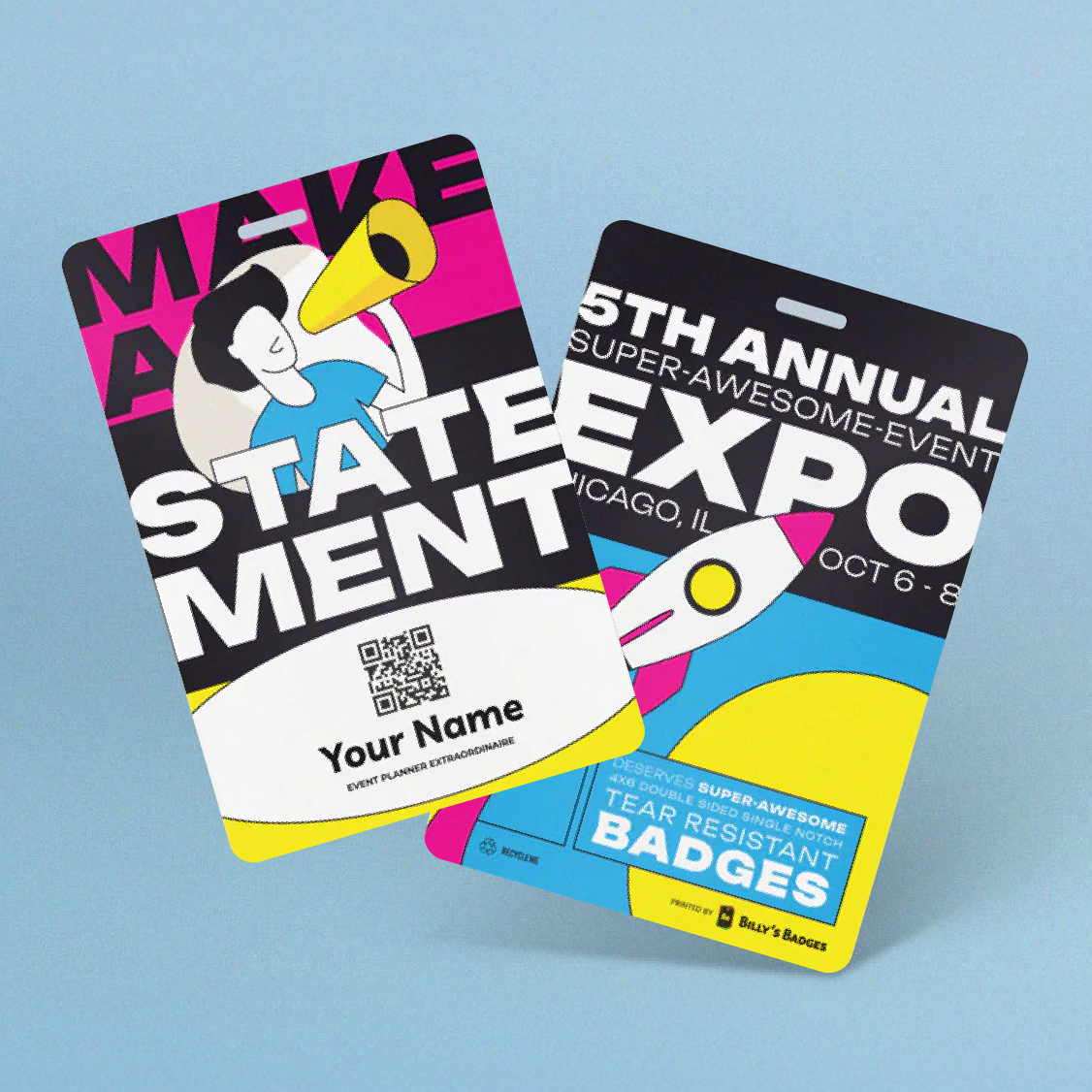
Paper event badges are designed to run smoothly through direct thermal printers without ink or toner — perfect for dynamic registration environments. With paper badges, you can:
- Pre-print branding: Logos, sponsor branding, and color backgrounds in advance.
- Personalize on-site: Add attendee names, titles, and QR codes at the registration desk.
- Handle walk-ups: Print last-minute registrations on demand.
- Keep lines moving: Thermal printing is fast enough to keep check-in flowing.
Because direct thermal printing uses heat instead of ink, it simplifies logistics and reduces maintenance issues. For events expecting walk-ups or frequent data changes, paper badges offer maximum flexibility.
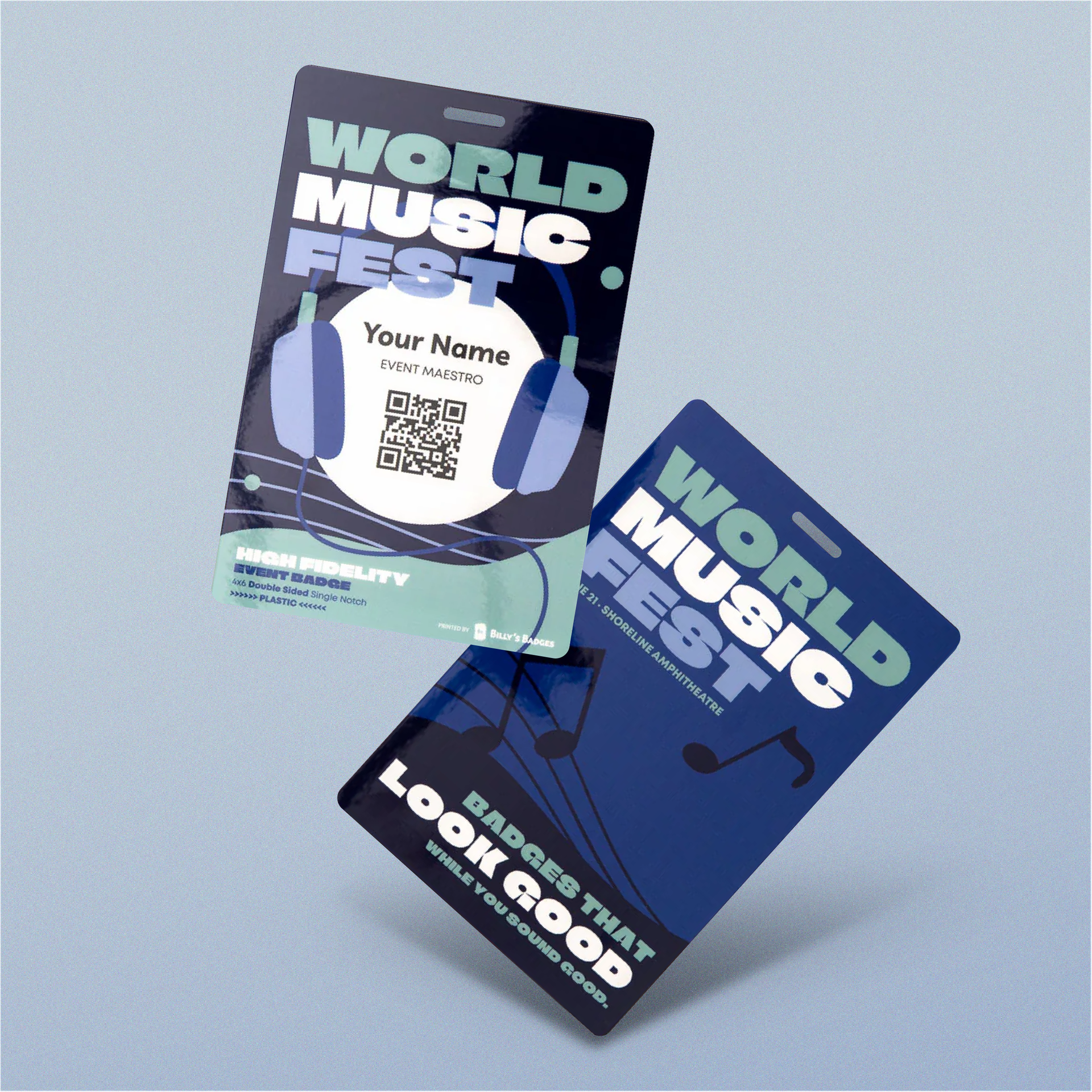
Plastic event badges offer a more elevated, durable option commonly used for multi-day conferences, outdoor events, and VIP experiences. They resist moisture, bending, and wear better than paper. Plastic badges can be pre-printed with:
- Full-color branding: Edge-to-edge color and graphics.
- Logos and sponsors: Pre-printed at production for crisp, durable results.
- Custom layouts: Tier-specific colors and design variations for different attendee groups.
Direct thermal printers can't print directly onto plastic. If attendee information needs to be added on-site, you'll need to print attendee details on adhesive labels and apply them to the plastic badge. While that adds a step, many planners choose plastic for its premium appearance and long-term durability.
4. Verify print quality and scan performance
Badges must remain legible and scannable throughout the event. Smudged names or faded QR codes slow access control and create attendee frustration.
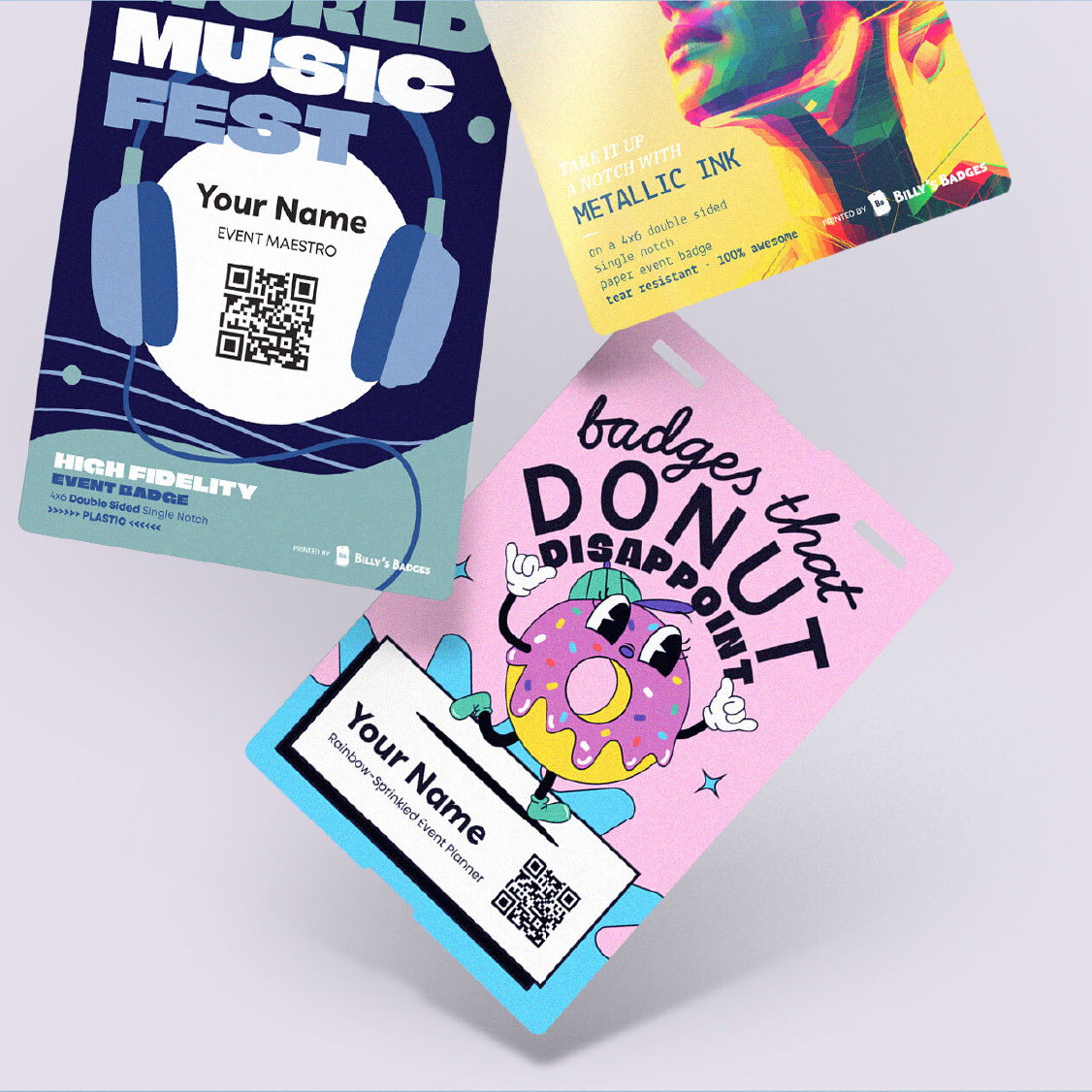
Before placing an order:
- Request samples: Order a sample pack to experience print quality in person.
- Test QR codes: Scan with your actual lead retrieval and check-in equipment.
- Review contrast and clarity: Make sure text reads cleanly under conference lighting.
- Confirm smudge resistance: Especially important if attendees handle their badges frequently.
High-contrast, crisp printing ensures smooth session tracking and exhibit hall access.
5. Review environmental standards
Sustainability is increasingly important in event planning. Many organizations now require eco-conscious sourcing and production practices.
Look for vendors who offer:
- FSC-certified materials: Responsibly sourced paper stock.
- Sourcing documentation: Verifiable supply chain claims, not just marketing language.
- Waste reduction: Production practices that minimize offcuts and material loss.
- Transparent environmental claims: Specific facts, not vague "green" labels.
Aligning badge materials with sustainability goals supports your broader event mission.
6. Assess customization capabilities
Your badge is valuable branding real estate. Beyond displaying a name, it reinforces your event identity and sponsor partnerships.
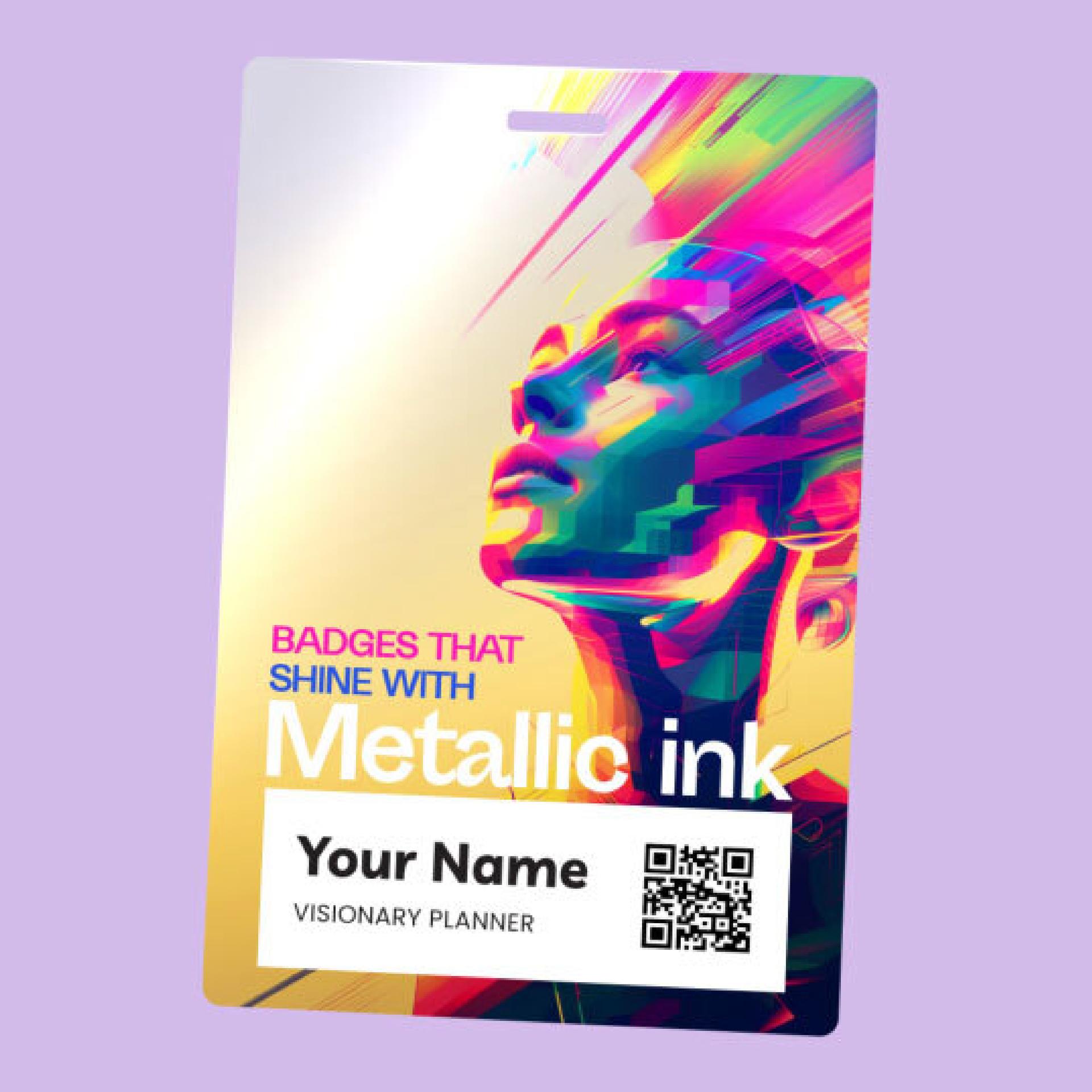
A capable vendor should provide:
- Edge-to-edge color: Full-bleed printing with no white margins.
- Pre-printed branding: Logos and sponsor placement built into the badge stock.
- Variable data printing: Per-attendee details merged at production.
- Matching lanyards: Custom-color or branded lanyards to complete the look.
- Color accuracy: Consistent brand colors across the full print run.
For paper badges, branding can be pre-printed while attendee information is added on-site. For plastic badges, the full design is pre-printed and personalized using adhesive labels when needed.
7. Look for responsive, tech-savvy support
Events move quickly, and your badge vendor should understand that urgency. Production delays or slow communication create unnecessary stress during event week.

Choose a partner who offers:
- Clear production timelines: Realistic dates, not best-case promises.
- Rush and short-run options: Flexibility for tight deadlines and small reorders.
- Fast proof approvals: Same-day or next-day digital proofs.
- Accessible customer support: Real humans who pick up the phone during event week.
An experienced event badge company anticipates tight deadlines and last-minute attendee changes — instead of treating them as exceptions.
Your event badge printing partner
When it comes to direct thermal printing, the right badge vendor makes the difference between smooth, professional check-ins and chaotic lines. Choose a partner who understands your tech, your timeline, and your brand.
Need badges for your next event? Billy's Badges delivers quick turnarounds without sacrificing quality. Whether it's a small workshop or a massive conference, our team understands the nuances of your industry and offers tailored solutions other providers might miss.
Nothing beats the peace of mind that comes with knowing your badges are handled with care — by a partner who knows what event day really looks like.
Frequently asked questions
Common questions event planners ask when ordering custom event badges.
How much do custom event name badges typically cost?
Custom event name badges usually range from $1 to $5 per badge, depending on quantity, size, material, print method, and finishing options. Bulk orders, standard sizes, and single-sided printing lower costs, while premium materials, full-color printing, and fast turnaround increase pricing.
Where can I order custom event name badges online?
You can order custom event name badges online from specialty event badge printers, print-on-demand companies, and event branding vendors. Look for providers that offer online proofing, fast production, bulk pricing, and multiple material options such as paper or plastic.
Where can I find bulk discounts for custom event badges?
Bulk discounts are typically available when ordering 100 badges or more, with larger savings at higher quantities. Event badge manufacturers often provide tiered pricing, reduced per-unit costs, and discounted reorders for conferences, trade shows, and multi-day events.
What materials are used for durable custom event badges?
Durable custom event badges are commonly made from plastic, laminated cardstock, synthetic paper, or rigid plastic. Plastic and laminated options offer the highest durability, water resistance, and professional appearance, making them ideal for multi-day or high-traffic events.