
Event photography pays for itself long after the event ends: in recap emails, sponsor reports, next year's registration page, and months of social posts. The difference between a folder of usable images and a folder of crowd shots comes down to planning. This guide covers how to brief a photographer, a shot list by event moment, consent, and a plan for repurposing the content.
Decide what the photos are for
Before you write a shot list, list where the images will be used. Each use needs different shots:
- Next year's marketing: Wide venue shots, full rooms, and energetic crowd moments for the registration page and promo emails.
- Sponsor deliverables: Logos on stage screens, booths with traffic, and sponsored sessions, matched to what each sponsor package promised.
- Speaker thank-yous: Clean shots of every speaker on stage, which speakers often share and tag you in.
- Social media: Vertical shots, detail close-ups, and candid moments that work in a feed.
- Internal reporting: Proof of attendance, setup, and on-site experience for your stakeholder report.
Hiring and briefing a photographer
Corporate event photographers commonly charge from about $150 an hour at the entry level to $400 or more for premium work, and standard delivery of edited images takes 7 to 14 days. If you need images during the event for live social posts, negotiate same-day selects in the contract, since rush delivery usually costs extra.
Send a one-page brief at least a week before the event that includes:
- Run of show: Times and rooms for keynotes, awards, receptions, and anything that happens once.
- Must-have list: Named people (executives, speakers, sponsors) with headshots so the photographer can find them.
- Point of contact: One staff member who walks the photographer to VIPs and handles changes.
- Brand notes: Logos, signage, and backdrops to capture, and anything to avoid (messy back-of-house, competitor branding).
- Delivery specs: Number of edited images, file sizes, orientation mix, folder structure, and usage rights.
Pro tip: Confirm usage rights in writing. Your contract should state that you can use the photos for marketing, and whether sponsors and speakers can use them too.
The event photography shot list
Organize the shot list by event moment, not by subject, so the photographer can follow it in order through the day.
Before doors open
- Empty venue: Wide shots of the main room, stage, and branded spaces with everything set and lit.
- Details: Table settings, signage, swag, and badges laid out at registration.
- Team: A group photo of staff and volunteers before it gets busy.
Arrival and registration
- Check-in: Attendees picking up badges and lanyards, smiling staff, a moving line rather than a long one.
- First impressions: The entrance, welcome signage, and wayfinding in use.
Sessions and keynotes
- Speakers: Each speaker at the podium, mid-gesture, with the slide or stage branding visible.
- Audience: Reaction shots, note-taking, and Q&A from the side, plus one wide shot of a full room.
- Panels: Wide and tight shots, with every panelist in at least one frame.
Networking and expo
- Conversations: Small groups talking, laughing, and exchanging contacts, with badges readable where possible.
- Booths: Every sponsor booth with visitors, logo visible.
- Food and drink: Plated details and people gathered around stations.
Signature moments
- Awards and announcements: The handoff, the winner's reaction, and the group photo after.
- Evening events: Lighting, entertainment, and the room at its fullest.
Make badges and branding photo-ready
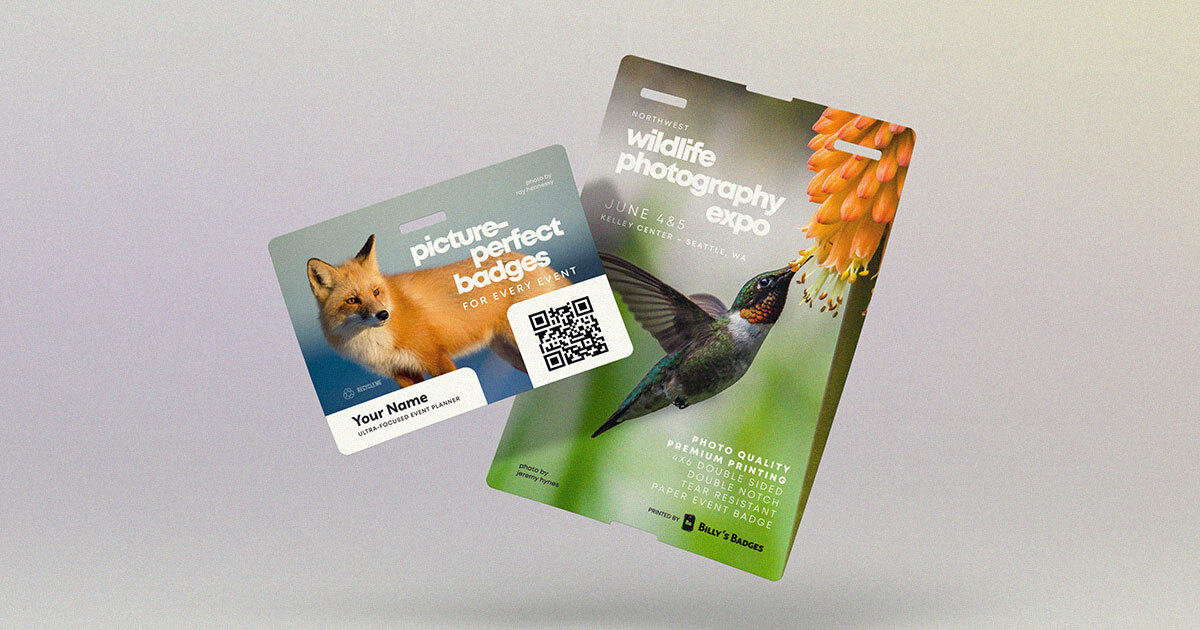
Badges show up in nearly every people shot, so they're one of the most photographed pieces of branding at your event. A few design choices help them work on camera:
- Large first names: Names that read in photos make social posts more personal and easier for attendees to share and tag.
- Clean logo placement: Put the event logo where a lanyard or clip won't cover it.
- Finish under stage lighting: Bright lights and flash can create glare on glossy surfaces. Compare paper and plastic finishes with a free sample pack before you order.
- Coordinated lanyards: Custom lanyards in your event colors carry your brand into crowd shots, even when badges flip.
Photo consent and opt-outs
Tell attendees they may be photographed in your registration terms, on signage at entrances, and in the pre-event email. Give people who don't want to be photographed a visible way to say so, such as a distinct lanyard color or a printed icon on their badge, and brief your photographer on what it looks like. Photos of children, healthcare settings, and some government or financial audiences may need stricter rules, so check with your legal or compliance contact.
Heads up: Consent requirements vary by location and audience. Treat this as a planning checklist, not legal advice.
Repurposing event content
One event can supply months of content if you plan the reuse before the photos arrive.
| Timing | Content | Where it goes |
|---|---|---|
| During the event | Same-day selects, behind-the-scenes, speaker quotes on photos | Social stories and posts, event app |
| Within 1 week | Highlight gallery and a recap post | Recap email, blog, LinkedIn |
| Within 2 weeks | Sponsor-specific photo sets, speaker photo packs | Sponsor reports, speaker thank-you emails |
| 1 to 3 months | Session highlights, attendee quotes paired with photos | Blog posts, newsletters, case studies |
| Next cycle | Best wide shots and crowd moments | Registration page, save-the-date, promo ads |
- Tag and file early: Sort images into folders by use (sponsor, speaker, venue, marketing) as soon as they arrive. Untagged galleries rarely get reused.
- Pair photos with words: Survey quotes and session takeaways turn a photo into a post. Our guide to gathering event feedback covers collecting quotes you can use.
- Review what worked: Note which images performed best, and add that to your post-event debrief so next year's shot list improves.
A clear brief, a shot list built around how you'll use the images, and photo-ready badges give you a library of content that keeps working until the next event.
Frequently asked questions
What should be on an event photography shot list?
Organize it by event moment: the empty venue and details before doors open, registration and arrivals, speakers and audience reactions, networking and sponsor booths, and signature moments such as awards. Add named must-have people and every sponsor deliverable.
How much does an event photographer cost?
Corporate event photographers commonly charge from about $150 an hour at the entry level to $400 or more for premium work. Rates vary by market, experience, hours, and delivery speed, and rush delivery usually costs extra.
How long does it take to get event photos back?
Standard delivery of edited images is typically 7 to 14 days. If you need photos during or right after the event, arrange same-day selects in the contract.
How do you handle photo consent at events?
Include a photo notice in registration terms, post signage at entrances, and give attendees a visible way to opt out, such as a distinct lanyard color or a badge icon. Brief the photographer on the opt-out signal and check local rules with your legal contact.
How can you repurpose event photos?
Use them for live social posts during the event, a recap email and gallery within a week, sponsor and speaker photo packs within two weeks, blog and newsletter content over the following months, and next year's registration page and promotions.
How do you make name badges look good in event photos?
Print large first names, place the logo where the lanyard or clip won't cover it, pick a finish that holds up without glare under stage lighting, and match lanyards to your event colors.