
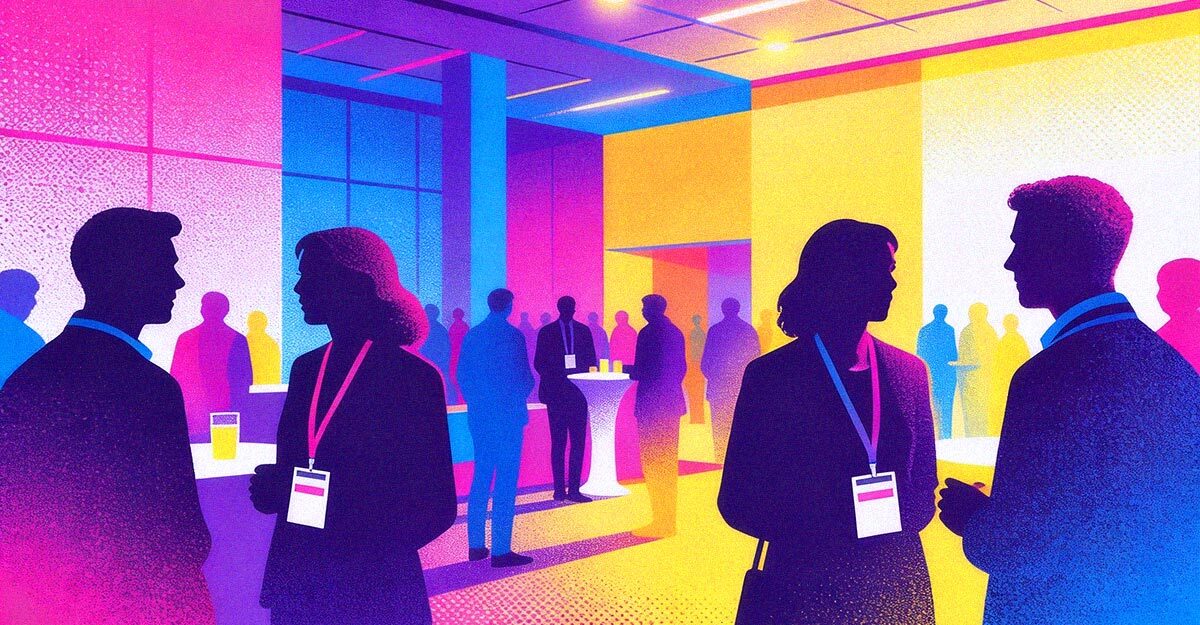
The future of events is more in-person, more personal, and more accountable than it was even two years ago. Heading into 2027, attendees are choosing live experiences on purpose, budgets are getting tighter, and planners are being asked to prove what an event actually did for the people in the room. Here are the event trends that will shape 2027 and what each one means for your planning calendar.
Event trends 2027 at a glance
- In-person is the main event: Attendees are treating live events as a priority, not a backup to virtual.
- Participation over passive seating: Attendees want hands-on, interest-driven formats instead of back-to-back keynotes.
- Tighter budgets, sharper choices: Planners expect flat or smaller budgets and rising costs per attendee.
- Measuring human impact: Headcount is no longer enough; stakeholders want proof of connection and learning.
- AI behind the scenes: AI handles drafting and logistics so the planning team can focus on the attendee experience.
- Hybrid built for the room: Hybrid events are being designed around the in-person audience first.
- Personalization from check-in: Attendees expect to be recognized, routed, and connected from the moment they arrive.
- Sustainability you can document: Vague green claims are giving way to specific, verifiable material choices.
1. In-person is the main event again
After several years of virtual and hybrid experiments, attendees are treating live events as worth the trip again. That raises the bar. People who chose your event over everything else on their calendar will judge it on whether it was worth showing up for.
Planners are responding with hospitality-driven design. Maritz research, cited in MPI's 2027 trends forecast, points to welcome gestures, recognition, and small surprises built into the attendee journey, from arrival to the final session.
2. Attendees want to participate, not just watch
Attendees are asking for more than a seat and a slide deck. Freeman's attendee research, also cited by MPI, found attendees increasingly value peer conversations and expo-floor interactions over traditional sessions.
What that looks like in practice:
- Shorter sessions: Swap some 60-minute talks for 20-minute sessions followed by small-group discussion.
- Interest-based tracks: Let attendees self-sort by topic, role, or hobby rather than by job title alone.
- Built-in networking prompts: Give people a reason to start a conversation, such as a "Ask me about" line on the badge.
- Hands-on formats: Workshops, demos, and roundtables beat panels for attendees who want to do something.
3. Tighter budgets will force sharper decisions
Optimism is high, but money is not loose. The Northstar Meetings Group and Cvent PULSE survey, summarized in Northstar's industry forecast, found only 23% of planners expected to produce more meetings than the year before, and 40% expected attendance to drop by at least 10%. The same forecast notes Amex GBT data showing 38% of event professionals expect cost per attendee to rise slightly.
Expect 2027 budgets to reward events that can explain every line item. If you have not already, build your plan from a clear event budget breakdown so you can show where each dollar goes and what you would cut first.
4. Measuring human impact, not just headcount
Registration numbers tell you who showed up. They do not tell you whether anyone learned something, met a future partner, or left with a reason to come back. MPI reports that 78% of event professionals now call measuring human impact a top priority.
Ways to start measuring it in 2027:
- Session-level check-ins: Scan badges at session doors to see which content actually drew a crowd.
- Connection tracking: Per-attendee QR codes on badges let attendees swap contact details in one scan, which also gives you a count of real connections made.
- Short pulse surveys: Two or three questions at the end of each day beat one long survey a week later.
- ROI tied to goals: Connect what you measure to the outcomes stakeholders care about, using an event ROI formula.
5. AI behind the scenes, people in front
AI is already part of most planners' toolkits for drafting content, researching destinations, and organizing logistics. The 2027 shift is about where it shows up. Attendees do not want a chatbot standing in for a human welcome; they want planners who have more time for the human parts because AI handled the spreadsheets.
Good places to put AI to work: first drafts of attendee emails, agenda formatting, session description cleanup, and checking attendee data for duplicates or inconsistent capitalization before it goes to print.
6. Hybrid events built for the room
Hybrid is not going away, but the center of gravity has moved back to the venue. The strongest hybrid events in 2027 will design the in-person experience first and give remote attendees a well-produced window into it, rather than splitting the budget evenly between two half-experiences. For the on-site side of that equation, see our guide to hybrid event logistics for the in-person audience.
7. Personalization starts at check-in
Attendees expect to be recognized. That starts at the registration desk and carries through every interaction where a name, role, or interest needs to be visible at a glance.
- Readable names: First names large enough to read from a few feet away, so conversations start without squinting.
- Role and access at a glance: Color bands or icons for speakers, sponsors, staff, and VIPs help everyone find the right person.
- Per-attendee QR codes: Billy's Badges can generate and preprint a unique QR code, such as a vCard, for every attendee from your registration spreadsheet.
- Interest prompts: An optional "Ask me about" or track line turns the badge into a networking tool.
If you want to test layouts before committing, our online badge designer lets you merge names from a data file and preview the result in 3D.
8. Sustainability you can actually document
Attendees and sponsors are increasingly skeptical of broad "eco-friendly" claims. In 2027, the events that earn credit will be the ones that can name specific material choices: FSC-certified paper and direct thermal badges, lanyards made from rPET, digital printing that skips printing plates, and print-on-demand production that avoids unused inventory. You can see what Billy's Badges offers on our sustainability page.
How to plan your 2027 calendar around these trends
| Trend | What to change | When to decide |
|---|---|---|
| In-person demand | Add interest-based tracks and hands-on formats | During agenda planning, 6 to 9 months out |
| Tighter budgets | Rank line items by attendee impact before you book | Before signing venue contracts |
| Measuring human impact | Pick two or three metrics and build scanning into the plan | Before you design badges and choose apps |
| AI behind the scenes | Assign AI to drafting and data cleanup tasks | At project kickoff |
| Personalization at check-in | Decide badge fields, QR codes, and role colors | Before registration opens |
| Documented sustainability | Choose materials you can name and verify | When you request samples |
Pro tip: Decide which fields will appear on your badges before registration opens. If you want an "Ask me about" line or a track name on the badge, you have to collect it on the registration form first.
The events that win in 2027 will be the ones attendees chose on purpose and remember for the right reasons, starting with the moment they pick up their badge.
Frequently asked questions
What are the biggest event trends for 2027?
The biggest event trends for 2027 are a strong return to in-person events, demand for participatory formats over passive sessions, tighter budgets with rising cost per attendee, a focus on measuring human impact, AI used behind the scenes, hybrid events designed around the in-person audience, personalization from check-in onward, and sustainability claims backed by specific materials.
Are in-person events growing in 2027?
Yes. In-person events are once again the main format for most conferences and corporate events, and hybrid events are increasingly designed around the in-person audience first, with remote attendees given a well-produced view into the room.
What do attendees expect from conferences in 2027?
Attendees expect to participate rather than just listen. They favor shorter sessions, small-group discussions, hands-on workshops, interest-based tracks, and easy ways to connect with other attendees, such as QR codes on badges for swapping contact details.
How will event budgets change in 2027?
Most planners expect flat or tighter budgets alongside modest increases in cost per attendee. That makes it more important to rank spending by attendee impact and to show stakeholders measurable results for each event.
How can name badges support 2027 event trends?
Name badges can carry per-attendee QR codes for networking and session scanning, color-coded roles for faster wayfinding, interest prompts that start conversations, and verifiable sustainable materials such as FSC-certified paper. Billy's Badges generates and preprints QR codes from your registration spreadsheet on any badge type.